
Introduction: Your Framework for a Successful AI Implementation Roadmap
The year is 2026, and artificial intelligence is no longer a futuristic concept but a competitive necessity. While the early adoption phase was a gold rush, the landscape is now littered with stalled projects, bloated budgets, and underwhelming ROI. The key to success is not just adopting AI, but implementing it with a strategic, deliberate, and forward-thinking roadmap that fully leverages its powerful

. This guide provides a comprehensive framework for organizations to move beyond pilot purgatory, avoid common pitfalls, and unlock tangible value from their AI initiatives. We will detail a step-by-step process—from aligning with business goals and preparing your data to selecting the right models and ensuring responsible governance—designed for the realities of the current AI-powered economy. A clear
roadmap for AI implementationis the critical factor that separates industry leaders from laggards, and well-executed
ai effortswill define the next generation of market leadership. A core component of success lies in the detailed creation of
implementation roadmaps. These are not high-level strategy documents but granular, actionable plans that outline specific projects, timelines, resource allocation, and dependencies. Effective
implementation roadmapsserve as the central nervous system for your entire AI program, ensuring all teams are aligned and moving in the same direction. Without this level of detail, even the best strategies falter during execution. Therefore, developing robust
implementation roadmapsis a prerequisite for translating AI potential into tangible business outcomes, with the best
implementation roadmapsincluding clear metrics for success.
Implementation Roadmaps and Your Strategy Roadmap: Anchoring in Business Strategy
Before a single line of code is written or a model is selected, your AI roadmap must be anchored in your core business strategy. The most common point of failure is a "technology-first" mindset, where teams chase exciting new tools without a clear problem to solve. For a successful
AI implementation, you must adopt a
"problem-first, technology-second"approach. This ensures every initiative is directly tied to a tangible business outcome and supported by solid
strategic planning.
Aligning AI Strategies with Core Business Objectives
Pursuing "AI for AI's sake" is a direct path to wasted resources. The foundational step is to align every potential project with specific, measurable business objectives. Successful
ai strategiesare built on this alignment, ensuring technology serves the primary business
objective. To achieve this strategic alignment, we recommend a workshop methodology. Bring together department heads from Sales, Marketing, Operations, and HR to map their most significant challenges and key performance indicators (KPIs). From there, you can categorize potential
ai applicationsand projects based on their ability to deliver value in one of four key areas: *
Increase Revenue:Use cases like dynamic pricing engines, AI-powered
lead generation, and hyper-personalized marketing campaigns. *
Reduce Costs:Projects focused on intelligent process automation, predictive maintenance for machinery, or optimizing supply chain logistics through powerful
ai solutions. *
Mitigate Risk:Applications such as advanced fraud detection systems, automated compliance monitoring, and cybersecurity threat analysis. *
Enhance Customer Experience:Initiatives like intelligent support chatbots, sentiment analysis to gauge customer satisfaction, and personalized user journey mapping.
Building Momentum for Your AI Implementation with Quick Wins
Once you have a list of potential projects, you must
prioritize aiinitiatives strategically. An effective method is to use a
2x2 matrix, plotting each initiative based on its potential
Impactversus its technical and organizational
Complexity. This allows you to identify a viable starting
use casethat demonstrates value quickly. Your initial focus should be on the high-impact, low-complexity quadrant. Securing early, visible wins is crucial for building organizational momentum and securing C-suite buy-in for more ambitious, long-term projects. These "quick wins" demonstrate value, validate your overarching
ai strategies, and help foster a culture of data-driven innovation. Examples of 2026-relevant quick wins include: *
AI-powered internal search:Deploying a model that understands natural language to help employees find information instantly within internal knowledge bases and document repositories. This is a very effective initial
ai use case. *
Automated contract analysis:Using AI to quickly review contracts for key clauses, risks, and obligations, dramatically speeding up legal and procurement workflows. *
Advanced customer sentiment analysis:Analyzing emails, support tickets, and call transcripts to get a real-time pulse on customer satisfaction and identify emerging issues. This
ai use casecan provide immediate strategic insights.

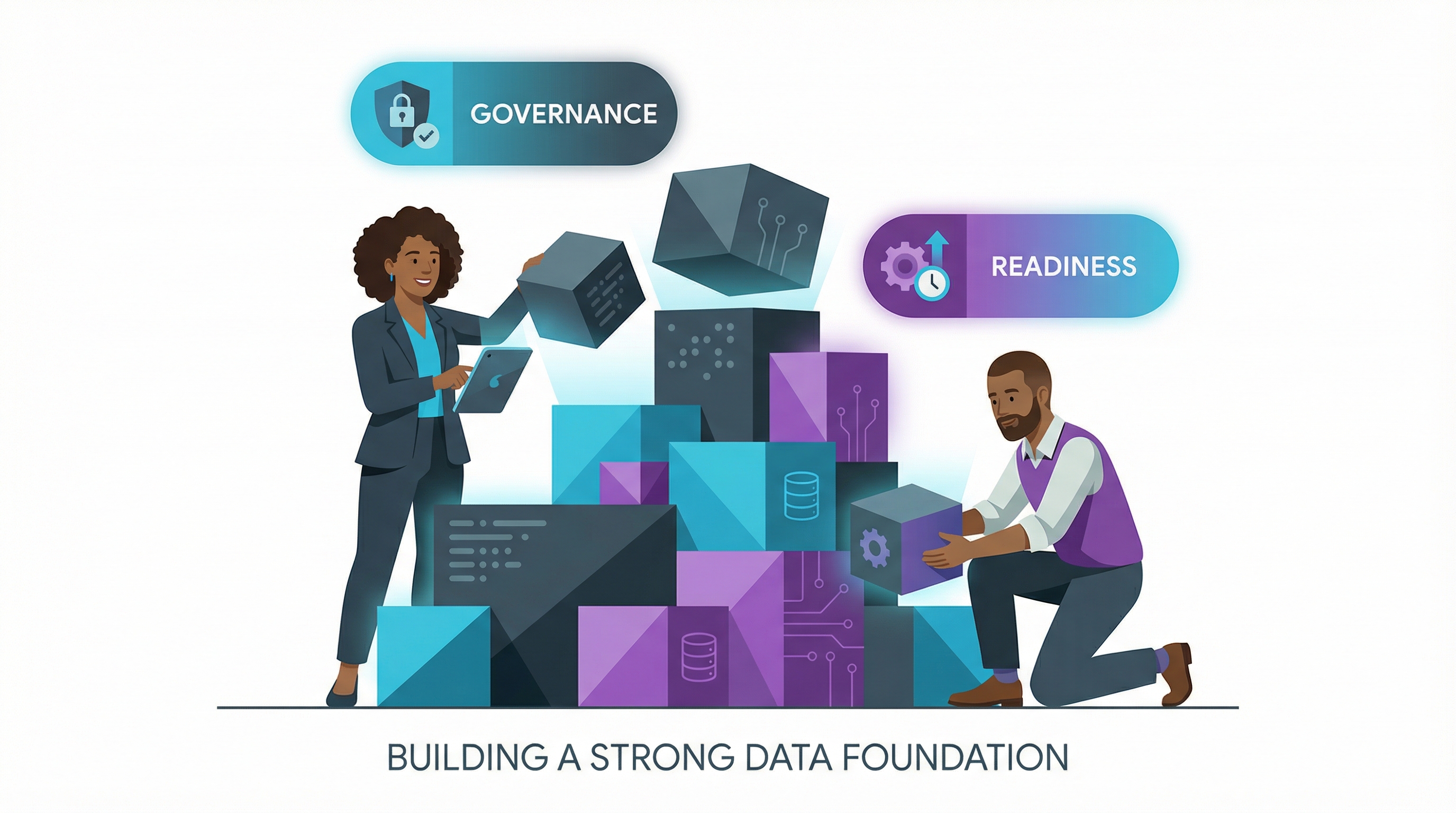
Step 2: Data Governance as the Foundation of Your AI Implementation Roadmap
Data is the fuel for any AI system, and the most common reason AI initiatives fail is a lack of high-quality, accessible data. Industry research consistently shows that organizations underestimate the effort required to prepare their data estate. This section addresses this fundamental prerequisite, framing
ai readinessnot as a technical task but as a strategic imperative. A solid data foundation is essential to
build your AI successfrom the ground up.
Overcoming Data Hurdles in Your Artificial Intelligence Implementation
The phenomenon of "pilot purgatory"—where promising AI proofs-of-concept (PoCs) never make it to production—is almost always a data problem. A small, manually cleaned dataset might work for a demo, but it often crumbles under the demands of a production-level model that requires continuous, reliable data feeds, underscoring the importance of organizational
ai readiness. According to a pivotal Q4 2025 Forrester study, data governance and quality issues remain the primary obstacle to scaling AI. The report found that
75% of IT leaders cited "unstructured or inaccessible data"as the main reason AI projects fail to move beyond the pilot stage (
2025 Report). Common challenges include: *
Data Silos:Critical information is fragmented across different departments and systems, making it impossible to get a holistic view. *
Inconsistent Formatting:Data is recorded differently across the organization, leading to errors and inaccuracies. *
"Dark Data":Valuable information is locked away in unstructured formats like PDFs, emails, and images, and is not being used.
Building a Data Quality Framework for a Successful AI Implementation
To overcome these hurdles, your AI roadmap must include a dedicated workstream for data readiness. This involves creating a comprehensive plan with actionable steps and adhering to data management
best practices: 1.
Data Discovery & Cataloging:The first step is to understand what data you have, where it resides, and who owns it. Use data cataloging tools to create a single source of truth for your organization's data assets. 2.
Data Quality Assessment:Implement tools and processes to measure the accuracy, completeness, consistency, and timeliness of your key datasets. Establish baseline metrics to track improvement over time. 3.
Data Integration & ETL/ELT Processes:Build automated pipelines to extract, transform, and load (ETT/ELT) data from various sources into a centralized repository, such as a data lakehouse. This a core part of any modern
AI integrationstrategy. 4.
Governance Policies:Establish clear rules for your data. Define data ownership, create role-based access controls, and set policies for data retention and lifecycle management.
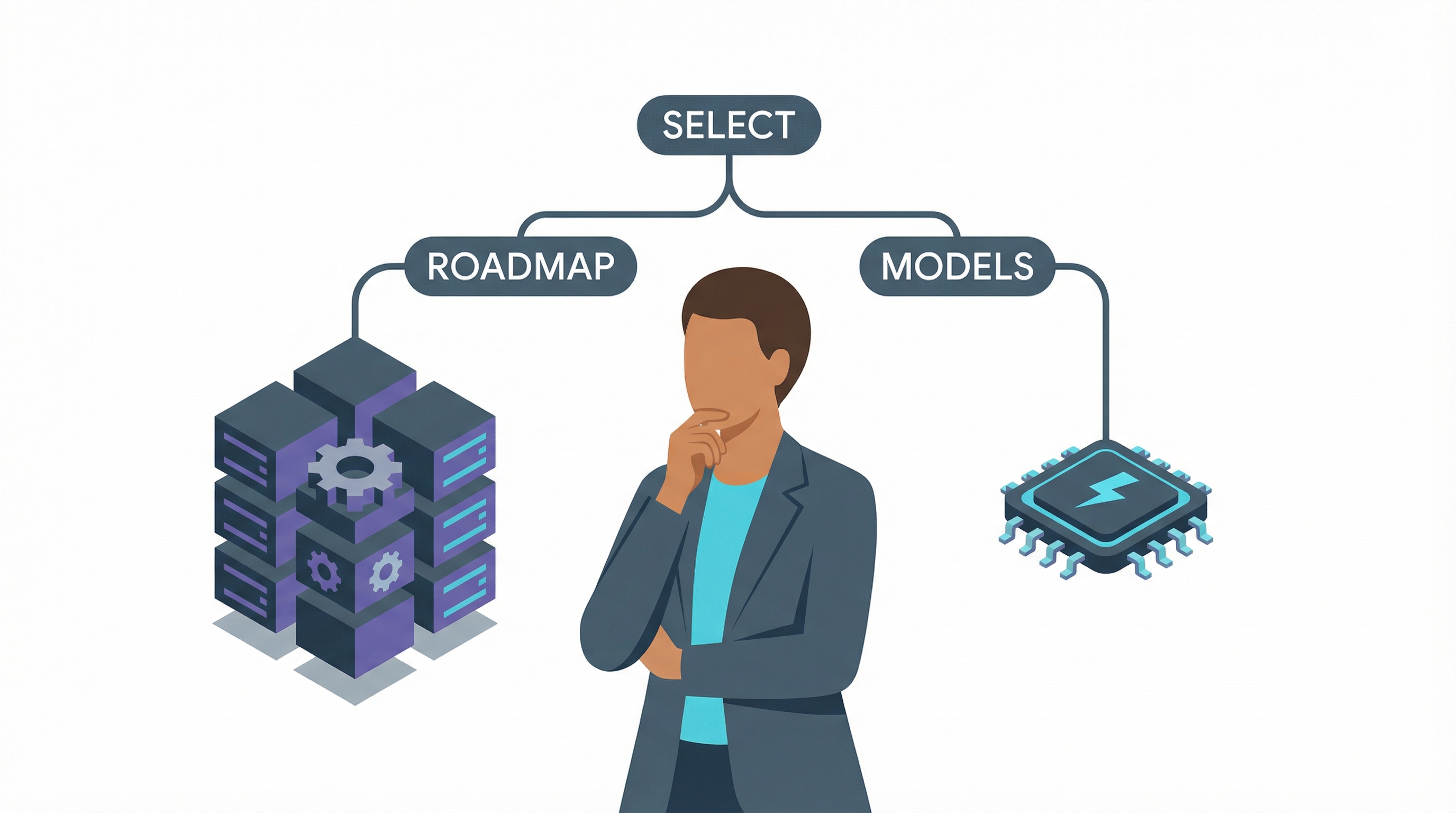
Step 3: Selecting AI Technologies and Models in Your AI Roadmap
The AI model landscape of 2026 is vastly different from the "bigger is better" era of the early 2020s. While massive, general-purpose models still have their place, the strategic advantage has shifted towards smaller, more efficient, and highly specialized models. This section provides a framework for selecting the right tool for the job, ensuring your chosen
ai technologiesare both powerful and cost-effective.
Modern AI Strategies: Why Domain-Specific Models Win
The trend is clear: organizations are moving away from relying solely on large, generic APIs. A report from the McKinsey Global Institute highlights this shift, noting that
the deployment of smaller, domain-specific AI models grew by over 250% between 2024 and 2026(
Source). This is because companies are fine-tuning models on their proprietary data to gain a competitive edge and enhance their
ai capabilities. Massive, general-purpose models have significant limitations, including high costs, latency issues, a lack of deep domain knowledge, and data privacy concerns when sending sensitive information to third-party APIs. In contrast, smaller, fine-tuned models offer compelling benefits that make their
ai usefar more practical: *
Higher Accuracy:They are experts in a specific domain, leading to more relevant and precise outputs. *
Lower Cost:They require less computational power, reducing both training and inference costs. *
Greater Control & Security:Keeping the model and data in-house enhances security and protects intellectual property. For example, a model fine-tuned on a company's internal engineering logs will be far more effective at troubleshooting technical issues than a general large language model (LLM).
A Framework for Your Strategy Roadmap and Model Implementation
In 2026, the decision of how to source your AI model can be broken down into a simple hierarchy as part of your overall
strategy roadmap: *
Buy (API-based):This approach is best for non-core, standardized tasks where you have no competitive advantage to gain. Examples include text-to-speech services or basic image recognition. These are simple
ai technologiesto procure. *
Fine-Tune (Open Source): This is the dominant strategy for most businesses.It involves taking a powerful, pre-trained open-source model and further training it on your own proprietary data. This offers the best balance of performance, cost, and customization. *
Build (From Scratch):This is the most expensive and time-consuming option, reserved only for highly specialized, mission-critical applications where no suitable base model exists and you have unique, world-class AI research talent. When selecting a model, key considerations include performance benchmarks, data requirements, scalability, and the total cost of ownership (TCO), which includes infrastructure, maintenance, and monitoring.
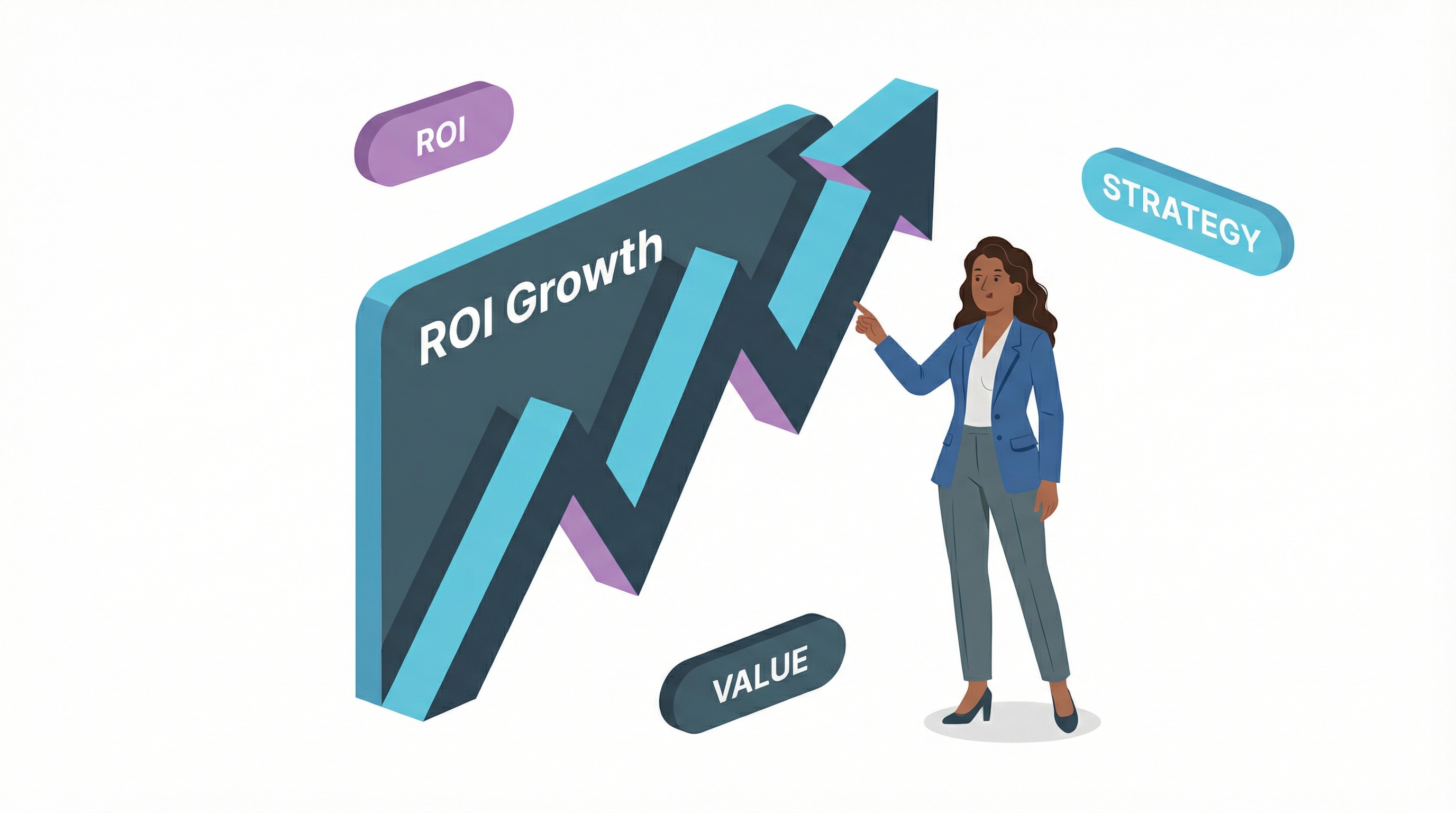
Step 4: Measuring Success with Your Strategy Roadmap and Implementation Roadmaps
One of the most significant challenges in the current AI landscape is bridging the gap between technological potential and financial reality. Many AI projects that are technical successes still fail to meet C-suite expectations for return on investment (ROI). This section provides a realistic framework for defining, tracking, and communicating the true business value and overall
ai valueof your AI investments.
Setting Realistic ROI Goals for Your AI Implementation
The hype surrounding AI can lead to unrealistic expectations. According to Gartner, this is a widespread issue. A 2026 survey revealed that
68% of enterprises with active Generative AI projects report that ROI is falling short of initial C-suite expectations(
Reference). This disconnect is primarily driven by unforeseen integration costs and a failure to align projects with a clear business case from the outset. The root causes of this ROI gap include: *
Hidden Costs:The budget often overlooks critical expenses like data preparation, system integration, ongoing model monitoring, and the significant cost of reskilling talent. *
Vague Business Cases:Many projects are initiated with a goal like "improve efficiency" but lack specific, measurable success metrics. *
Overhyped Expectations:Teams focus on futuristic capabilities shown in demos rather than the practical, near-term value that can be delivered.
A Multi-Faceted ROI Framework for Your AI Implementation
To accurately measure success, you must move beyond simple revenue-versus-cost calculations. A comprehensive ROI model for AI should incorporate metrics across three distinct categories. Critically, you must establish baseline measurements for these metrics *before* implementation to accurately quantify the lift from your new
ai solutions. *
Direct Financial Metrics:These are the classic ROI figures. Cost savings from automating manual tasks. Revenue lift from improved personalization or dynamic pricing. *
Operational Metrics:These measure improvements in efficiency and productivity. Reduction in process cycle time (e.g., customer onboarding). Increase in employee productivity (e.g., hours saved per week). Improvement in production quality or reduction in error rates. *
Strategic Metrics (Indirect Value):These capture the long-term, competitive benefits. Improved customer satisfaction scores (CSAT/NPS). Faster time-to-market for new products and services. Enhanced quality of strategic decision-making.
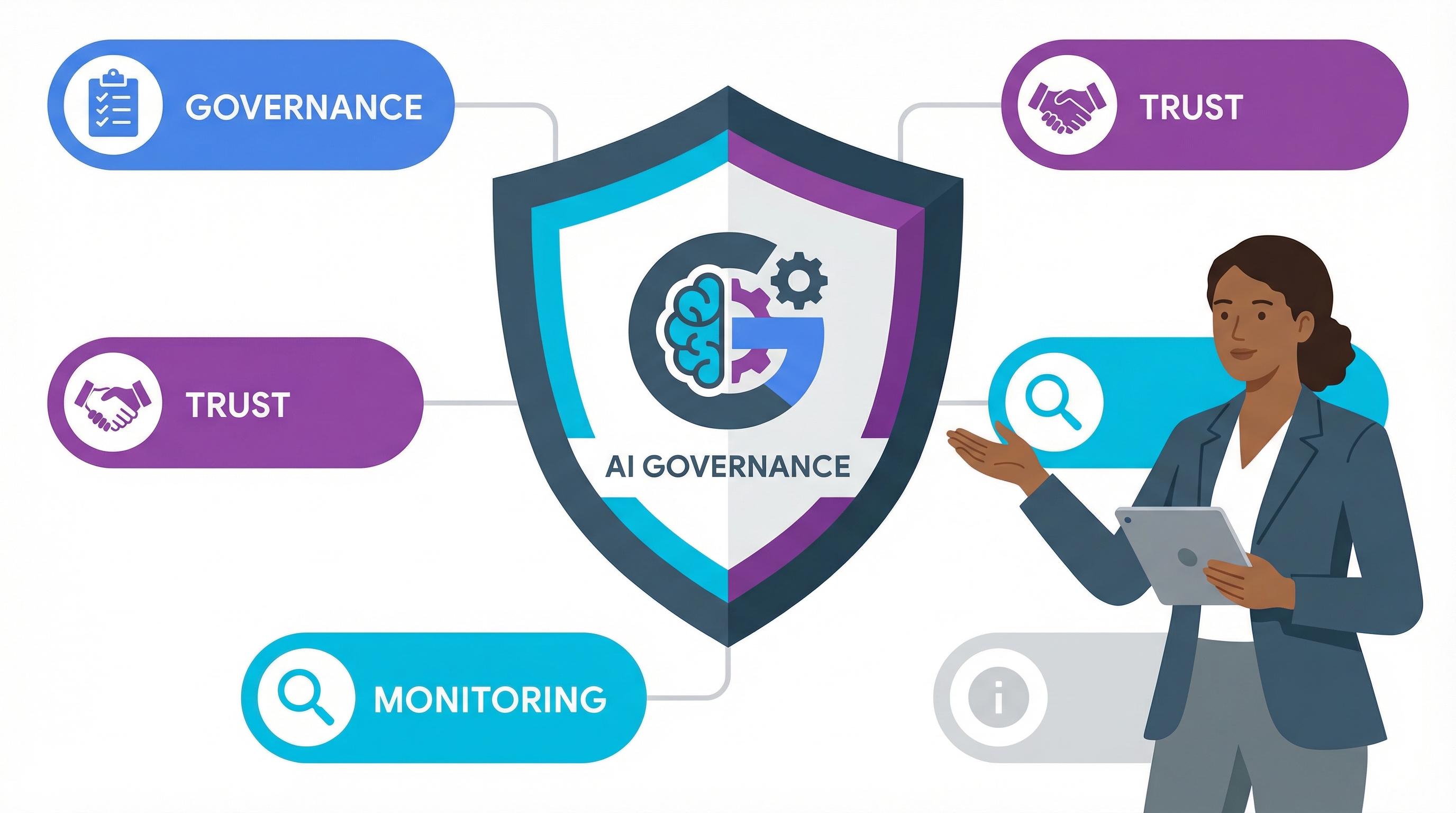
Step 5: Integrating Responsible AI into Your Implementation Roadmap
In 2026, Responsible AI is no longer a niche topic for ethics committees; it is a mandatory, board-level concern. Driven by new regulations and increasing consumer awareness, building AI systems that are fair, transparent, and secure is now a critical component of risk management and brand reputation. A robust governance program is not an optional add-on but a necessity for any organization deploying AI.
Why Responsible AI is a Non-Negotiable Part of Implementation
The global regulatory landscape has matured rapidly. The enforcement of landmark legislation like the EU AI Act has created significant legal and financial risks for non-compliant organizations. This regulatory pressure has fundamentally changed corporate priorities. A report from the World Economic Forum shows that as of January 2026,
82% of organizations consider "Responsible AI" frameworks a mandatory component of their AI roadmap, a dramatic increase from just 35% in 2024 (
Study). The risks of ignoring responsible AI are severe, including massive fines, lasting reputational damage, and a complete loss of customer trust. Proactively embedding ethical principles into your
AI implementationis now a competitive differentiator, making responsible
ai usea top priority.
A Governance Framework for Responsible AI Implementation
A comprehensive Responsible AI program should be built on five core pillars, integrated throughout the AI lifecycle from conception to retirement: *
Fairness and Bias Mitigation:Actively audit datasets for historical biases and test model outputs to ensure they do not produce discriminatory outcomes against any demographic group. *
Transparency and Explainability (XAI):Implement tools and processes that allow you to understand and explain why a model made a specific decision, which is crucial for debugging, compliance, and building user trust. *
Privacy and Data Security:Ensure all AI systems are designed to comply with data protection regulations like GDPR, protecting sensitive customer and corporate information. *
Accountability and Human Oversight:Establish clear lines of responsibility for the performance and impact of AI systems. For critical decisions, ensure a human is always in the loop to provide final judgment and oversight. *
Robustness and Reliability:Rigorously stress-test models to ensure they perform safely, predictably, and securely, especially when faced with unexpected or adversarial inputs in real-world scenarios.
Step 6: Building Your AI Team and Driving Adoption
The most advanced technology in the world is useless without the right people to build, manage, and use it effectively. The human element is the final, critical piece of your AI roadmap. This involves not only assembling a team with modern, 2026-era skills but also fostering an organizational culture that embraces data-driven decision-making and continuous learning.
Key Roles to Build Your AI Implementation Team
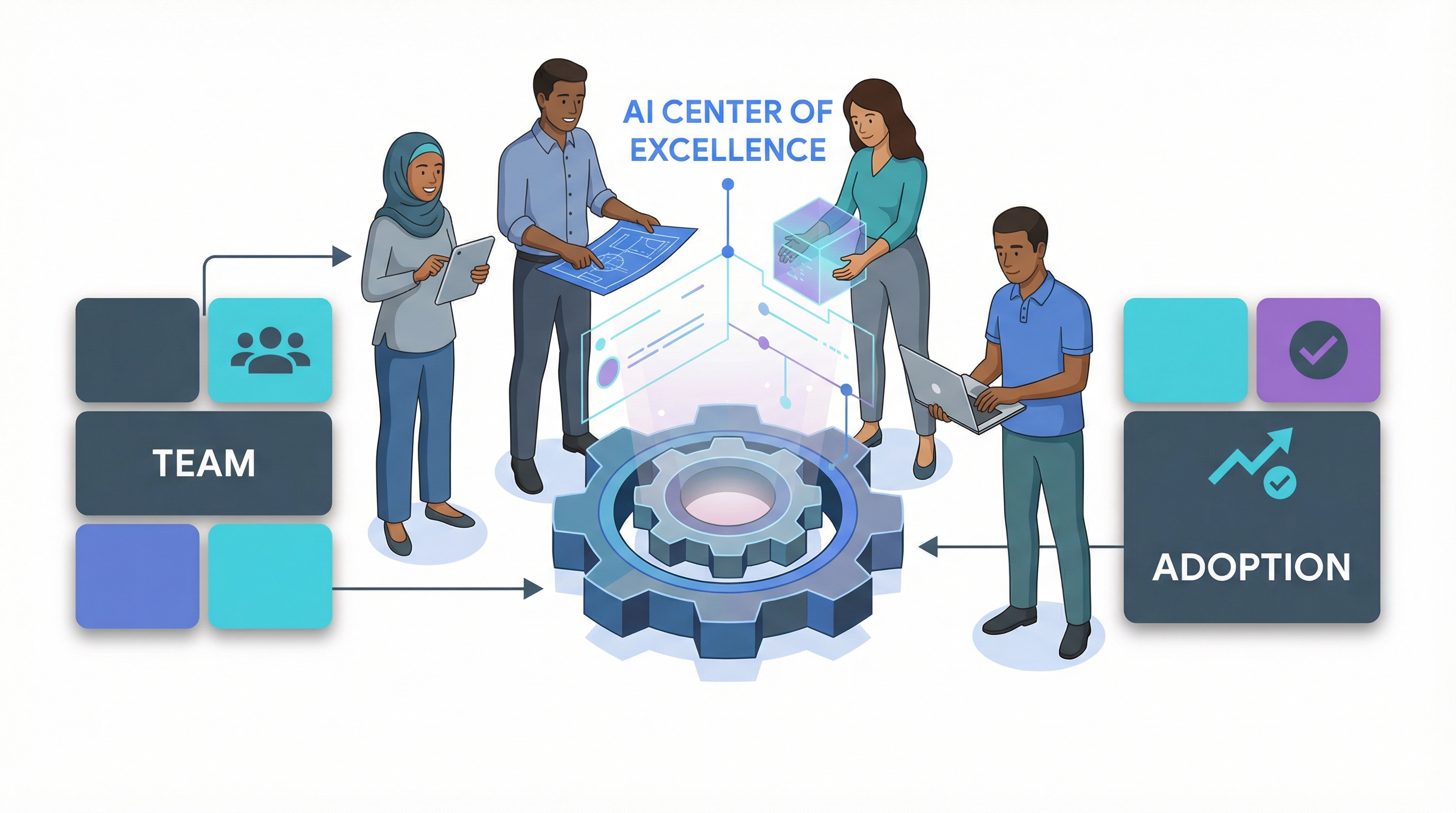
The skill sets required for AI success have evolved far beyond the traditional "Data Scientist" role. A modern AI Center of Excellence (CoE) is a cross-functional team that includes both technical and business-focused experts. Key roles include: *
AI Strategist/Product Manager:The vital link between business stakeholders and the technical team, responsible for defining use cases and ensuring projects deliver business value. *
Data Engineer:The architect of the data ecosystem, responsible for building and maintaining the robust data pipelines that AI models depend on. *
MLOps Engineer:A specialist who manages the entire lifecycle of AI models in production, including deployment, monitoring, retraining, and scaling. *
AI Governance/Ethics Officer:A crucial role dedicated to ensuring all AI projects adhere to responsible AI principles and comply with regulations. *
AI Trainer/Adoption Specialist:A change management expert focused on training end-users, gathering feedback, and driving adoption of new AI tools across the business. Successful
ai developmenthinges on having the right talent mix. While technical skills are crucial, the modern landscape requires a deep understanding of MLOps, data engineering, and ethical governance. Investing in continuous upskilling is a core part of effective
ai development. Furthermore, the process of
ai developmentitself has shifted, with a greater emphasis on fine-tuning and deploying specialized models rather than building from scratch, making expertise in this area, such as custom
AI agent development, highly valuable.
Driving Enterprise-Wide Adoption of Your AI Implementation
For AI to be truly transformative, it must be embraced beyond the CoE. Driving enterprise-wide
ai adoptionrequires a deliberate change management strategy that builds trust and demonstrates clear value. This is where your investment in
enterprise aipays off. *
Demystify AI:Reduce fear and resistance by educating non-technical employees on what AI is (and isn't) and how it will augment their roles rather than replace them. *
Role-Specific Training:Create internal training programs that focus on how employees can use new AI tools responsibly and effectively in their specific day-to-day jobs. If you need help developing this strategy, expert
AI strategy consultingcan provide a clear path forward. *
Showcase Success Stories:Publicize the "quick wins" from your roadmap internally. Demonstrating how AI is helping teams save time and achieve better results is the best way to build confidence and encourage broader adoption. *
Establish Feedback Loops:Create simple channels for users to report issues, ask questions, and suggest improvements for the AI tools they use.
FAQ: Your AI Implementation Roadmap Questions Answered
Q1: What is a realistic timeline for an AI implementation?
There's no single answer, but it's best to think in phases. A pilot for a well-defined use case with clean data can take 3-6 months. A full-scale, enterprise-wide implementation of a core process, like a new
workflow automationsystem, can take 12-24 months. The key is to use an agile, iterative approach with clear milestones rather than attempting a risky "big bang" launch.
Q2: What's the biggest mistake in an AI implementation roadmap?
The biggest mistake is poor data readiness. As the 2025 Forrester study highlighted, 75% of projects get stuck in pilot purgatory because the underlying data is inaccessible, inconsistent, or of poor quality. A roadmap that doesn't allocate at least 50% of its initial effort and resources to data discovery, cleaning, and governance is a roadmap destined for failure.
Q3: What's the best model strategy for our AI implementation?
In 2026, the dominant and most effective strategy for most companies is to
fine-tune existing, powerful open-source modelson their proprietary data. Building from scratch is extremely expensive, slow, and rarely necessary. Buying off-the-shelf API solutions is best for generic, non-strategic tasks. Fine-tuning offers the optimal balance of high performance, manageable cost, and competitive differentiation.
Q4: How can we future-proof our AI roadmap?
Focus on modularity and fundamentals. First,
build a robust and flexible data infrastructure—this will always be a valuable asset, regardless of which AI models are popular. Second, prioritize building team skills in core areas like AI strategy, data engineering, and MLOps, as these are transferable across different tools. Finally, treat your roadmap as a living document, with formal reviews and updates every 6 months to adapt to the evolving technological and business landscape.
Conclusion: Turning Your AI Implementation Roadmap into Reality
A successful AI journey in 2026 is a disciplined, strategic process. It begins not with technology, but with clear business alignment. It proceeds through the foundational work of achieving data readiness, followed by the pragmatic selection of the right models for the right tasks. It is validated by a realistic, multi-faceted approach to measuring ROI and safeguarded by a mandatory commitment to ethical and responsible governance. This comprehensive
roadmap for AI implementationis your blueprint to
build your AI success. This roadmap is not a static document to be filed away, but a dynamic guide for a continuous journey of innovation, adaptation, and value creation. The challenge of a full-scale AI transformation is significant, but the rewards—enhanced efficiency, deeper customer understanding, and a sustainable competitive advantage—are transformative. The time to move from planning to execution is now. By following this structured approach, your organization can navigate the complexities of the AI landscape and turn its immense potential into profitable reality for any given
ai use case. Ready to begin your AI transformation?
Get startedby speaking with one of our AI strategy experts today.
Author Block