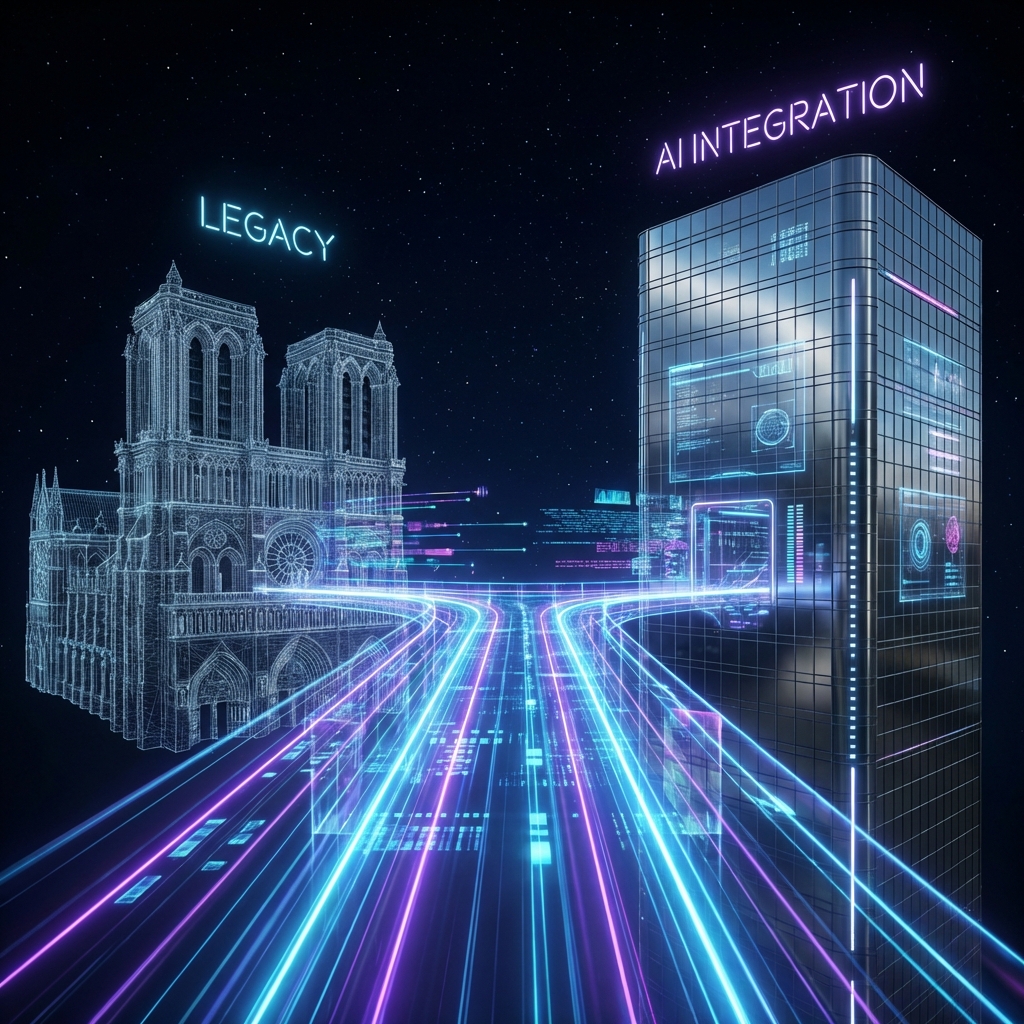
Welcome to 2026, where the static, one-size-fits-all landing page is officially a relic of the past. The battle for customer attention is won or lost in milliseconds, and the winning strategy is

. The era of crafting a single message and hoping it resonates with a broad audience is definitively over. Today, relevance is the most valuable currency in digital marketing. This guide explores the new standard: creating dynamic landing pages with AI. We will dissect the technology, strategy, and seismic market shifts that make AI-driven personalization not just a competitive advantage, but a fundamental requirement for survival and growth. This isn't just about adding a name to an email; it's about re-architecting the user experience from the ground up with a modern website builder designed to
create landing pagesat scale. We'll cover the core concepts, the undeniable data backing this revolution, the essential tech stack, and a practical blueprint for launching your first autonomous campaign that adapts in real-time to every single visitor.
Understanding the Power of AI-Powered Landing Pages
How an AI Landing Page Adapts to Every Visitor When You Use AI
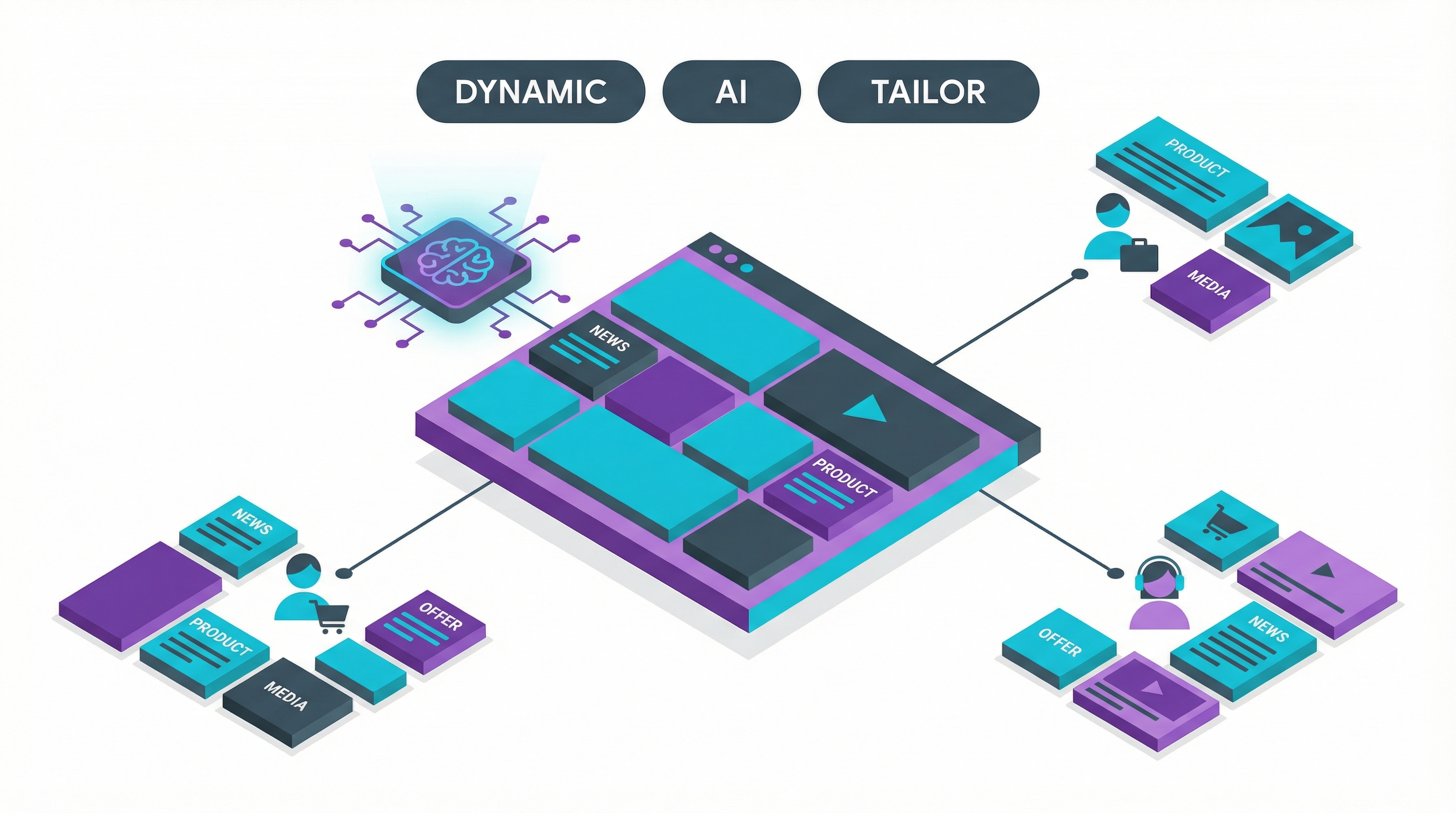
A dynamic AI landing page is a webpage that
autonomously alters its dynamic content in real-timefor each individual user, utilizing features like dynamic text replacement. This includes everything from the headline and hero image to the body copy, calls-to-action (CTAs), and social proof testimonials. AI can
tailorall of these elements for maximum impact.
Key AI Features for Dynamic Content
These advanced
ai capabilitiesgo far beyond the "personalization" of the past, which might have involved inserting a prospect's first name. In 2026, it means 1:1 content composition driven by a deep, contextual understanding of the visitor. The AI considers demographics, firmographics (for B2B), browsing behavior, the traffic source that brought them there, the time of day, and dozens of other signals to construct the most compelling experience for that specific moment.
From A/B Testing to AI: How to Generate High-Converting Pages
This represents a monumental paradigm shift from the
traditional landing page. Traditional A/B or multivariate testing (MVT) was a slow, manual process aimed at finding a single "winning" variation that performed best for the majority of your audience. It was a game of averages. AI-driven optimization completely changes the game. Instead of finding one winner, it runs thousands of micro-experiments simultaneously, where the
ai analyzesuser interactions to find the unique "winner" for every individual and micro-segment, delivering truly
personalized landing pages. The system continuously learns from every interaction, improving
engagement and conversion ratesand refining its approach without any human intervention. This moves your strategy from making educated guesses to delivering guaranteed relevance.
The ROI of AI: How to Generate Landing Pages with High-Converting AI
How an AI Landing Page Generator Solves Content Scaling
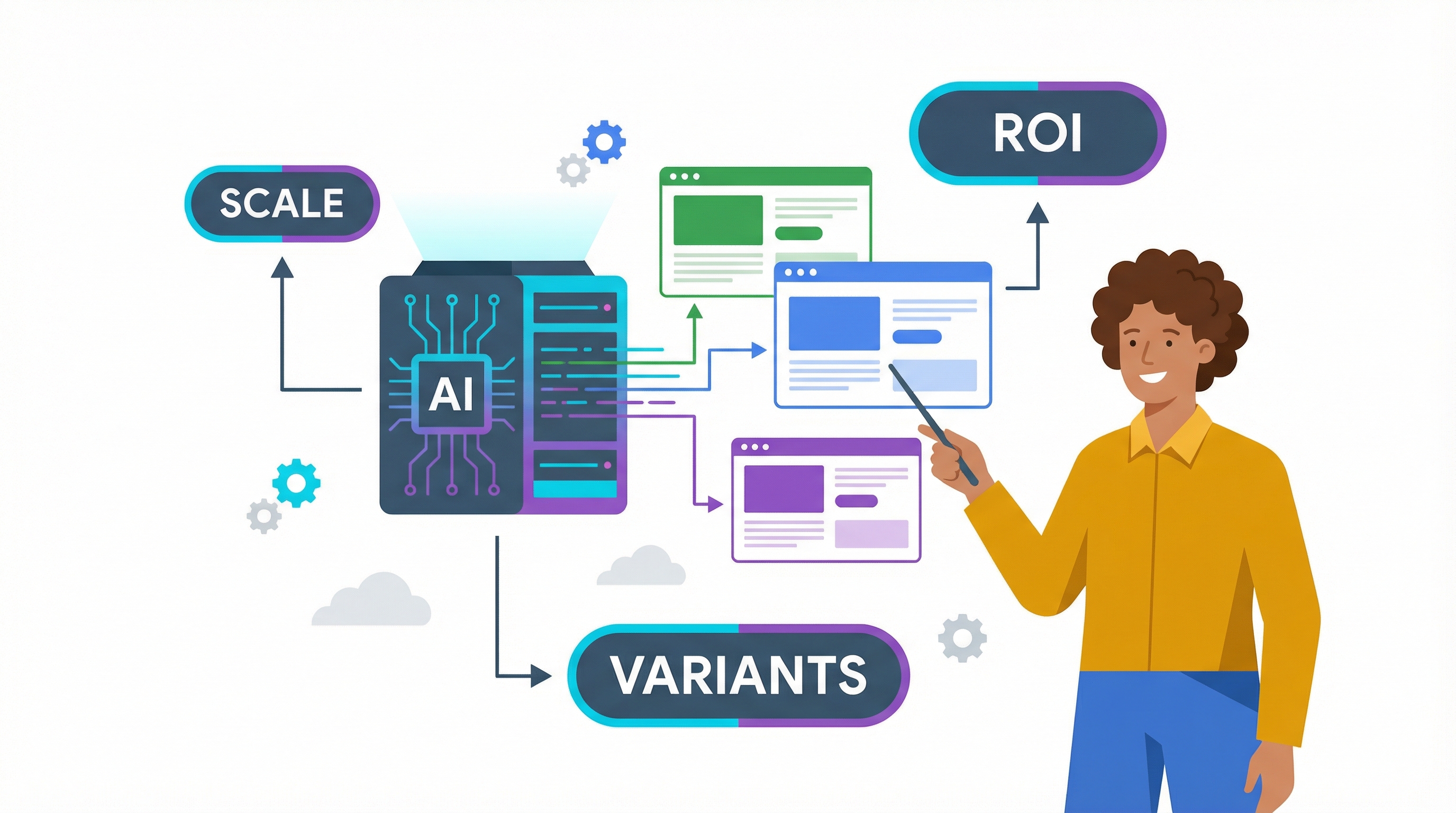
For years, marketers have understood the power of personalization but have been constrained by a fundamental challenge: the inability to create
landing pages for multiplecontent variations to match infinite user contexts. This was the great personalization bottleneck. According to HubSpot's 2025 State of AI in Marketing Report,
65% of marketing leaders cited the "inability to scale personalized content creation" as their primary bottleneck. Generative AI has shattered this barrier. (
Source) An AI landing page generator, integrated with your personalization engine, is a system where the
generator createscountless compelling, on-brand copy and
landing page variantsfor every segment, solving the scaling problem instantly.
Data-Backed Proof: Create High-Converting Landing Pages with AI
The business case for AI personalization is no longer theoretical; it's written in hard data for every
high-performing landingpage. The impact on core marketing metrics is too significant to ignore, moving this technology from a "nice-to-have" to a "must-have." The proof is in the performance. A landmark 2025 Forrester analysis, "The Hyper-Personalization Dividend," revealed that landing pages dynamically generated by AI for individual user profiles achieve an
average conversion rate lift of 38%over their static A/B tested versions. (
Source) A lift of this magnitude provides a clear mandate for adoption and fundamentally changes the economics of customer acquisition for all AI landing pages.
Building Your Tech Stack: How to Create Stunning Pages with AI Tools
Start with Data: Fueling Your Landing Page with AI
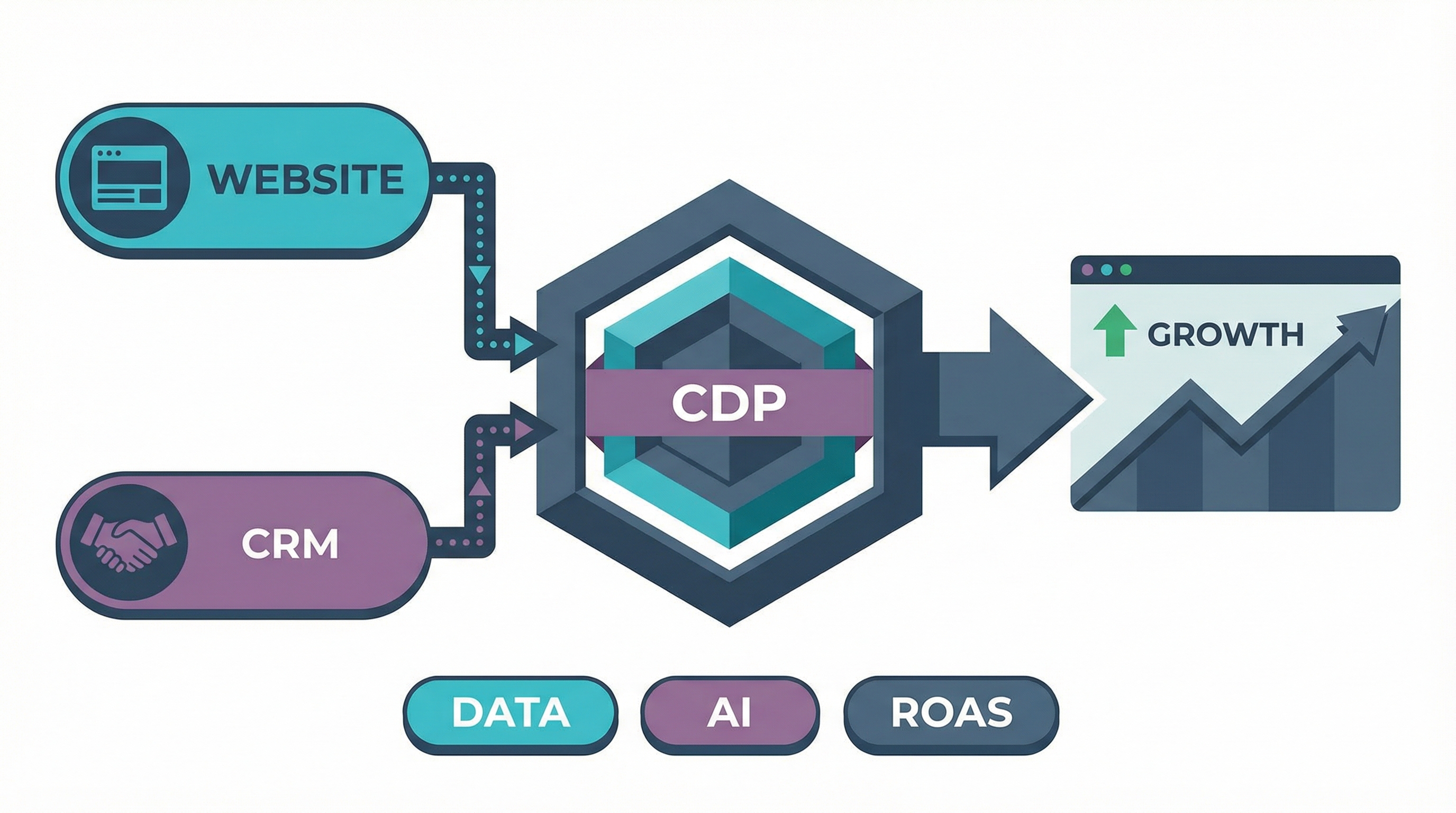
An AI engine is only as smart as the data it receives. A Customer Data Platform (CDP) is the foundational layer of any modern personalization strategy. It serves as the central nervous system,
unifying customer data from all touchpoints—your website, CRM, email platform, support tickets, and mobile app—into a single, coherent user profile that updates in real-time, often eliminating the need for complex
external tools. This rich, unified data is the fuel for intelligent personalization and creating a
personalized landingexperience for every visitor.
Real-Time Data: The Key to Generate High-Converting Results
The freshness and connectivity of your data are paramount. Stale or siloed data leads to irrelevant experiences. The financial impact is staggering, as shown in a recent industry survey from the CDP Institute. The 2025 report found that when an
ai landing page generator createspages connected to a real-time CDP, they generate a
2.5x higher return on ad spend (ROAS)than those using siloed or static data sets. (
Source) The reason is simple: real-time data allows the AI to react instantly to a user's most recent actions. This complete
AI integrationensures maximum relevance at the most critical moment of decision.
Choosing the Best AI: Your AI Landing Page Builder Options
The modern
website builderhas also fundamentally changed the technical requirements for marketing teams. In the past, creating multiple page variants required significant front-end
codingexpertise. Today's platforms eliminate the need for manual
coding, allowing marketers to
easily createand deploy pages through an intuitive
drag-and-drop builder. This shift away from complex
codingempowers teams to move faster and focus on strategy rather than technical implementation, because the need for advanced
codingis greatly reduced. This is the platform that ingests data from your CDP, makes decisions, and delivers the right content to the right user on your custom domain. Leading AI landing page builder platforms in 2026 include: *
Mutiny:Excels in B2B personalization with a strong focus on firmographic data. *
Intellimize:A powerful engine known for its continuous optimization capabilities at a massive scale. *
Evolv AI:Leverages evolutionary algorithms to test vast numbers of ideas simultaneously. *
Adobe Target:A mature enterprise solution with deep integration into the Adobe Experience Cloud. For organizations requiring bespoke solutions, advanced
AI agent developmentcan create proprietary models tailored to unique business challenges.
How to Create Landing Pages Faster with an AI Generator
The latest evolution in this tech stack is the integration of generative AI for automated
page generation. Personalization engines now connect directly to large language models (LLMs) via API. This allows platforms to
use ai to generatenew headlines, body copy, and CTAs on the fly, creating landing pages in seconds, not just select from a pre-written library, as the
ai generatescontent specifically for the user, further expanding the scope of optimization.
From Idea to Live Page: A Step-by-Step Guide for Landing Page Creation
Step 1: How to Create a Landing Page Strategy
Before launching, you must define your strategy. Start with your most valuable audience segments. For B2B, this could be by industry (e.g., SaaS vs. Healthcare) or company size. For B2C, you might segment by past purchase behavior or loyalty status. For each segment, identify the key data signals your CDP will provide, such as traffic source (e.g., Google Ads vs. LinkedIn) or pages viewed, which will allow you to
generate customexperiences. This strategic planning, which incorporates industry best practices, is a core part of our
AI Strategy Consultingservices.
Step 2: Streamlining Page Creation with Your Content Library
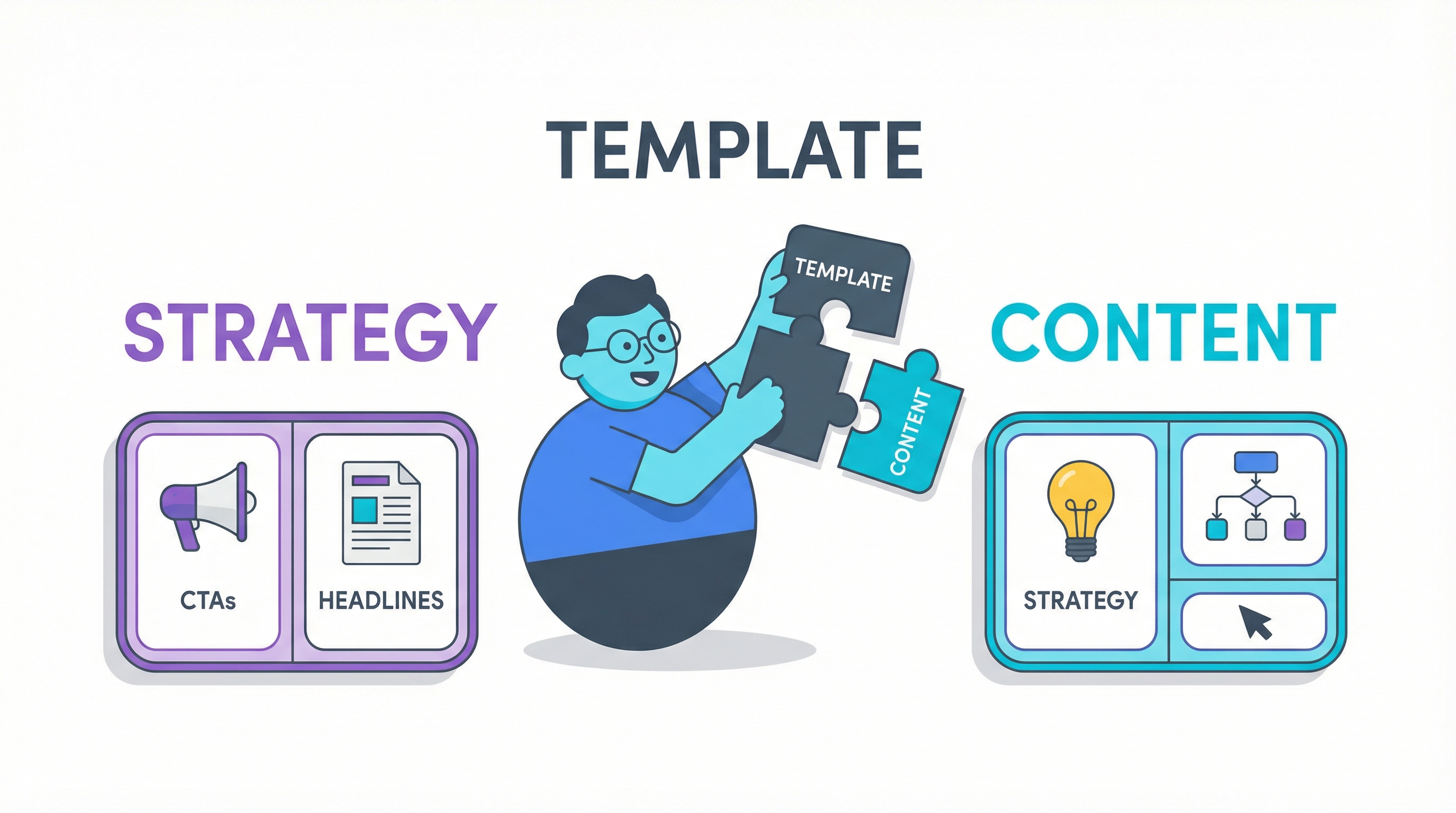
Start with a Flexible Website Builder Template
This modular approach is the key to efficient
page creation. Think of your landing page not as a static document, but as a modular
template. Break it down into its constituent parts: * Headlines * Subheadings * Testimonials * Case studies /
product pages* Hero images * Calls-to-Action (CTAs) Create multiple variations for each component, making your base template highly adaptable, and tagging them for the specific audiences they are designed to persuade.
Step 3: Configure Your AI to Create High-Converting Pages
Next, configure your AI personalization platform. The most critical step is to define your primary goal, such as "maximize form submissions for improved conversion" or "increase free trial sign-ups." You must also input your brand guidelines, including tone of voice parameters, approved product messaging, and any negative constraints (e.g., words or phrases to avoid) to ensure every AI-generated variation can
tailorits message while remaining perfectly on-brand. After launch, the system will continuously
optimizeevery element to achieve your primary goal. This AI tool is designed to
optimize landing pagesby adjusting headlines, images, and CTAs for each visitor segment, learning from every interaction. Unlike manual testing, which seeks to
optimizefor an average user, this technology works to
optimizethe experience for the individual. The goal is to
optimizeyour entire funnel automatically, driving better results without constant human oversight.
Step 4: Launch Your AI Landing Page and Monitor Performance
Once configured, you can go live and
publish your landing pageto the world. Your role now shifts from that of a manual tester to a strategic monitor, using advanced
analytics toolsto oversee the automated workflow. This is where technologies like
Robotic Process Automationcan further streamline operations. Instead of analyzing A/B test results, you'll be observing high-level
page performancedashboards as the AI automatically learns, adapts, and optimizes the experience for every single visitor.
Market Trends: Shifting Budgets to High-Converting AI Landing Pages
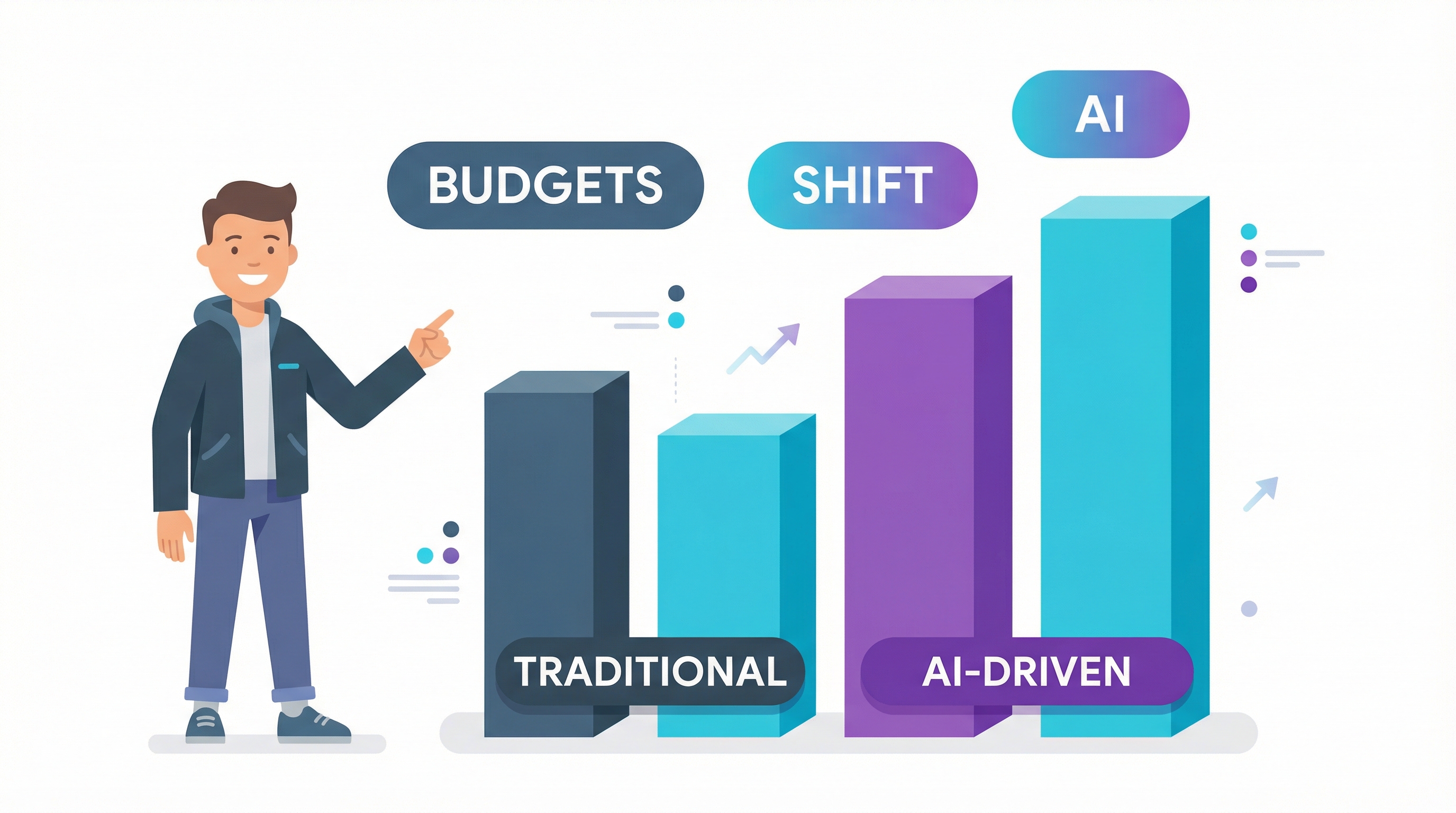
The move toward autonomous personalization isn't a niche movement; it's a market-wide pivot in how marketing resources are allocated. Budgets are actively following the superior results. A recent report from Gartner highlights this trend with startling clarity. Their 2025 "Market Guide for AI in Digital Experience Composition" predicts that by 2026,
over 70% of enterprise marketing organizations will have actively shifted budget away from traditional MVT toolstowards autonomous AI-driven personalization platforms for their core landing pages. (
Source) The "why" is clear: the sheer speed, scale, and superior conversion lifts of AI make manual MVT look slow, inefficient, and cost-prohibitive by comparison. It's a strategic move from finding a single "best guess" to delivering a guaranteed best experience, every time.
FAQs About Creating AI Landing Pages
How Does an AI Landing Page Generator Maintain Brand Voice?
Modern AI platforms are configured with strict
"brand guardrails."Before launch, you provide them with comprehensive style guides, approved product terminology, and regulatory compliance rules. The AI operates exclusively within these pre-defined constraints, ensuring all generated content is perfectly
tailored to your needswhile adhering to your brand and legal standards.
Is an AI Landing Page Builder Affordable for Small Businesses?
While powerful enterprise solutions exist, the technology has become far more accessible over the last few years. Many AI landing page generator platforms, some with
free AItrials, now offer tiered pricing models suitable for small and medium-sized businesses. Given the proven ROI—like the 2.5x ROAS lift—the investment often becomes cash-flow positive very quickly.
What Data Does the Best AI Need for High-Converting Landing Pages?
Start with the foundational data points and build from there. The most impactful data to begin with includes: *
Traffic Source:Where did the visitor come from (Google, LinkedIn, email)? *
Firmographics (B2B):Industry, company size, and technology stack. *
On-site Behavior:Pages viewed, content downloaded, and time on site. As your program matures, integrating CRM data like lead status or purchase history will unlock even deeper levels of personalization.

How to Create a Landing Page with AI and Get Started
The era of the static, one-message-fits-all webpage or
standalone landingpage is definitively over. In 2026, creating dynamic landing pages with AI on your custom domain is the definitive method for turning web traffic into revenue. By leveraging real-time data from a CDP and the autonomous power of AI optimization engines, businesses are creating
high-converting landing pages quicklyand unlocking unprecedented lifts in conversions and ROAS that were simply unattainable with old methods. It's the new standard for creating
professional landing pages. The shift documented by Gartner, Forrester, and others is not a forecast—it's the current reality. The question is no longer *if* your organization should adopt this technology, but how quickly you can integrate it to meet the modern customer's unwavering expectation of a truly personal digital experience. The future isn't about guessing what your audience wants; it's about letting AI deliver it to them, instantly. Ready to make the shift?
Get startedwith a team of experts today.
Author Block