
is no longer a novel experiment but a foundational pillar of enterprise architecture and competitive advantage. The global conversation around

has decisively shifted from "if" to "how effectively." We have moved past the initial hype cycle and into an era where a sophisticated, centrally-governed
AI strategyis the definitive factor separating market leaders from the laggards who are still grappling with siloed, ad-hoc
ai projectimplementations. A cohesive strategy is what transforms powerful
ai technologiesinto tangible enterprise value. This guide provides a comprehensive framework for developing and executing a scalable, secure, and sophisticated
generative AI strategyfor your enterprise in 2026. We will explore the critical pillars of success that define this new era of AI maturity: establishing robust governance, evolving your technology stack, navigating a complex regulatory landscape, reallocating budgets for trust and security, and fostering a deeply ingrained, AI-ready culture.
The Age of Generative AI: From Hype to Reality
The evolution of
generative aihas been remarkable, cementing its role as a transformative force. Today, generative ai is not just a tool for content creation; it's a core engine for business innovation and complex problem-solving. Understanding the full capabilities of modern generative ai is crucial for every organization looking to maintain a competitive edge. This new wave of generative ai allows for hyper-personalization at an unprecedented scale. Any business not actively leveraging generative ai is at a significant disadvantage, as the very nature of competition has been reshaped by the strategic application of generative ai. Developing effective
ai strategiesis now a core function of executive leadership. Companies can no longer rely on a single, static plan; instead, they need a portfolio of adaptable ai strategies to address different business units and market conditions. These evolving ai strategies must be agile, data-driven, and aligned with long-term corporate goals to deliver maximum impact. ## Governance: The Cornerstone of an Effective Generative AI Strategy The era of the "AI Wild West" is definitively over. In 2026, ungoverned AI is not an asset; it is a significant financial, legal, and reputational liability. The key to unlocking sustainable value is a centralized governance framework that brings order, consistency, and strategic direction to every AI initiative across the organization. A mature Generative AI governance model is built around a central AI Center of Excellence (CoE). This cross-functional team establishes clear ethical guidelines, creates standardized data handling protocols to ensure high
data quality, and implements a unified process for vetting, approving, and monitoring every
ai system. The "why" behind this centralized approach is clear: it ensures consistency, proactively mitigates risk, optimizes the use of expensive resources, and dramatically accelerates the scalable deployment of proven
ai solutionsacross all business units. ### Driving Enterprise Efficiency with a Mature Gen AI Strategy This move towards structured governance isn't just about risk management; it's a direct driver of operational efficiency. The data is unequivocal.
A 2026 global survey of CIOs by McKinsey revealed that enterprises with a mature, centrally-governed Generative AI strategy achieve an average of 22% greater operational efficiency in targeted business units compared to those with ad-hoc or departmental implementations(
Source). This efficiency is realized by avoiding redundant model training efforts, standardizing data pipelines for faster deployment, streamlining security and compliance reviews, and creating a mechanism for sharing best practices. For example, a single, governed customer data model can be leveraged by both Marketing and Sales teams to power different GenAI tasks, from personalized campaigns to predictive lead scoring, without duplicating effort or creating data silos. The rapid integration of
gen aiacross the enterprise is a testament to its flexibility and power. A key reason for this is its unparalleled ability to process and understand vast amounts of unstructured data, such as emails, reports, and transcripts. From finance to human resources, gen ai applications are streamlining workflows and unlocking new insights from corporate data. The most successful implementations of gen ai are those that are tightly integrated with existing systems, enhancing rather than replacing human expertise.

Evolving Your Tech Stack for AI Technologies
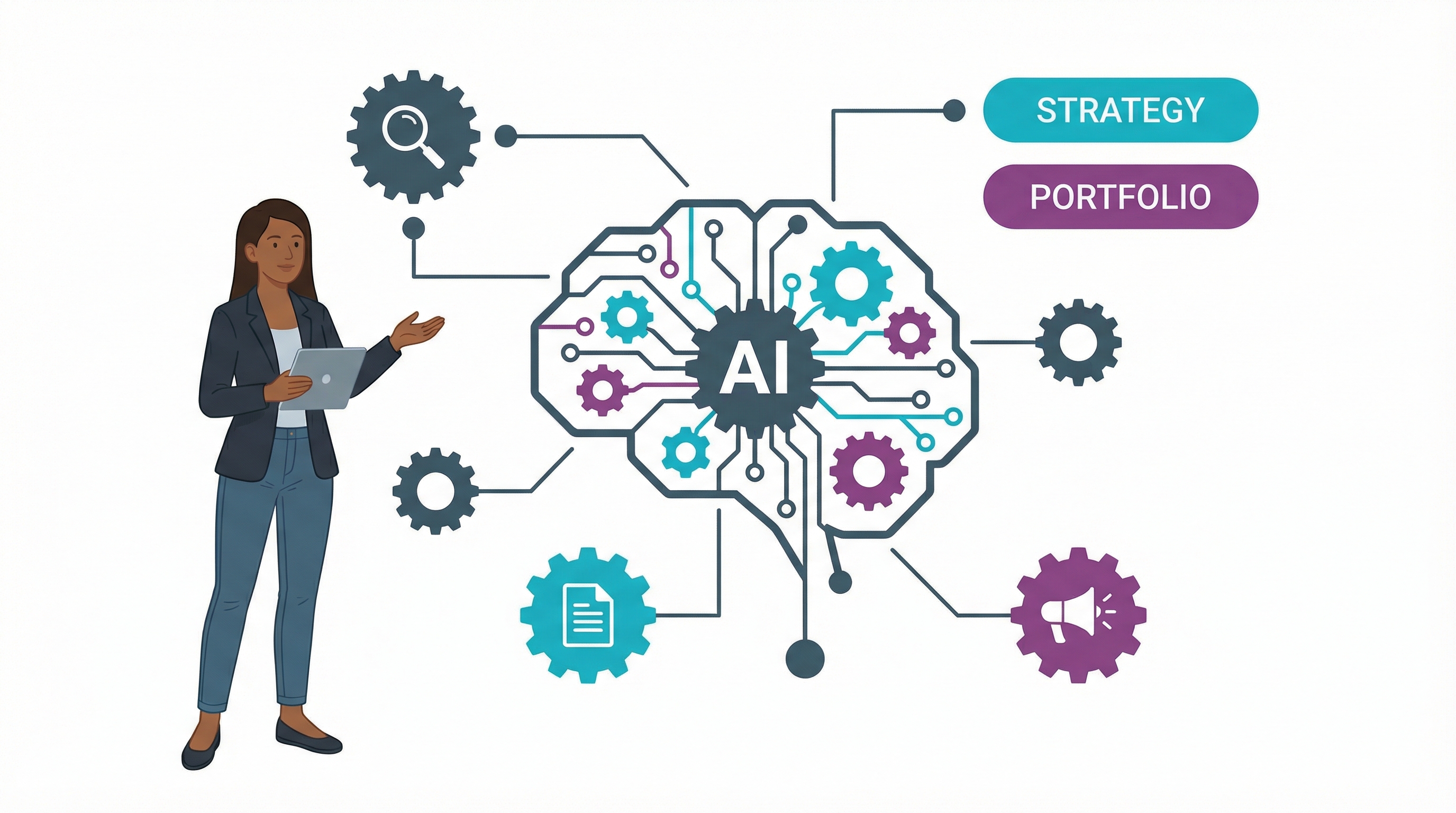
The 2024-2025 strategy of relying almost exclusively on large, general-purpose foundation models is now recognized as both inefficient and outdated for the majority of specific enterprise tasks. While these massive models remain useful for broad ideation and general content creation, the 2026 landscape is defined by a more nuanced "portfolio approach" to AI. This modern
AI strategyinvolves using a strategic mix of models: massive general models for brainstorming and multi-domain tasks, complemented by a suite of smaller, specialized models for specific, high-frequency, and mission-critical functions. The rapid maturation of Model-as-a-Service (MaaS) platforms has supercharged this trend, enabling enterprises to easily fine-tune, deploy, and manage these smaller, more efficient models within their existing cloud environments. A successful
AI integrationplan is key to managing this diverse portfolio. ### Fine-Tuning Models: A Key Tactic in Modern AI Strategies This strategic pivot is not anecdotal; it's a market-wide movement driven by clear business imperatives.
By Q1 2026, Forrester Research found that 70% of enterprise GenAI deployments shifted from using general-purpose public foundation models to smaller, task-specific models fine-tuned on proprietary data(
Source). This shift is propelled by three key drivers: *
Cost Reduction:Smaller, specialized models have dramatically lower inference costs and require a significantly smaller computational footprint, leading to substantial savings at scale. *
Improved Accuracy:Fine-tuning a model on a company's own proprietary data—which depends on excellent
data quality—results in far higher factual accuracy and contextual relevance than a general model can provide. *
Enhanced Data Security:Hosting and running these fine-tuned models in a private cloud or on-premise environment prevents sensitive corporate data from ever being exposed to public, third-party APIs, a critical security consideration. ## Navigating Compliance in Your Enterprise Generative AI Strategy By 2026, AI regulations have matured significantly beyond their initial frameworks. Successors to the landmark EU AI Act and new, robust frameworks across North America and the Asia-Pacific region have created a complex global compliance tapestry. In this environment, a reactive approach to compliance is a recipe for failure; a proactive strategy is now table stakes for any serious
enterpriseAI initiative. An effective GenAI data governance plan must be woven into the AI lifecycle from the very beginning. The core components include meticulous data lineage tracking to understand a model's training history, robust consent management systems for any customer-derived data, automated PII redaction tools to protect
sensitive dataand other private information, and clear data residency policies to comply with cross-border regulations. ###
A Top Concern for Business Leaders: The Compliance Challenge
The focus of enterprise concern has made a pivotal shift. Where talent was once the primary bottleneck, the legal labyrinth has taken its place.
In a 2025 study, Gartner identified 'Regulatory Compliance and Data Governance' as the single biggest obstacle for 68% of enterprise business leaders looking to scale generative AI, surpassing the previous top concern of 'Lack of Skilled Talent'(
Study). This change reflects two truths: the talent gap has been partially closed by new university programs and aggressive internal upskilling, but the regulatory landscape has become exponentially more complex. To overcome this, organizations must embed legal and compliance teams directly into the AI Center of Excellence from day one, invest in automated governance and auditing tools, and conduct regular "AI regulatory audits" to ensure ongoing alignment. ## Budgeting for Trust and Security in Your Gen AI Strategy The conversation around AI investment has matured. In 2026, AI Trust, Risk, and Security Management (AI TRiSM) is no longer an afterthought or a minor IT expense; it is a mandatory, significant line item in every enterprise GenAI budget. This reflects the understanding that a powerful AI model without robust safety measures is a dormant crisis. AI TRiSM is a comprehensive framework encompassing several critical functions: continuous model monitoring for performance drift and emergent bias, explainability (XAI) solutions to make model decisions transparent, advanced adversarial attack detection to guard against prompt injection and data poisoning, and AI-specific application security protocols. This investment is not a cost center. It is a powerful value driver that builds essential customer trust, ensures operational resilience, and safeguards the brand against catastrophic failure. ### The Economics of Enterprise AI: The Rise of TRiSM in Gen AI Budgets The reallocation of funds toward securing AI is one of the most dramatic financial trends in the tech sector.
As of 2026, Statista reports that enterprises are allocating an average of 35% of their total GenAI budget towards AI TRiSM solutions, a significant increase from just 10% in 2024(
Reference). This threefold increase in just two years is a direct response to a series of high-profile AI security breaches in 2024-2025, new regulatory mandates requiring full auditability and fairness, and the immense financial and reputational cost of a single, public AI failure. To spend smartly, enterprises should prioritize platforms that offer integrated TRiSM features rather than trying to stitch together a patchwork of standalone security
ai tools.
High-Value Generative AI Use Cases to Drive Your Strategy
A mature
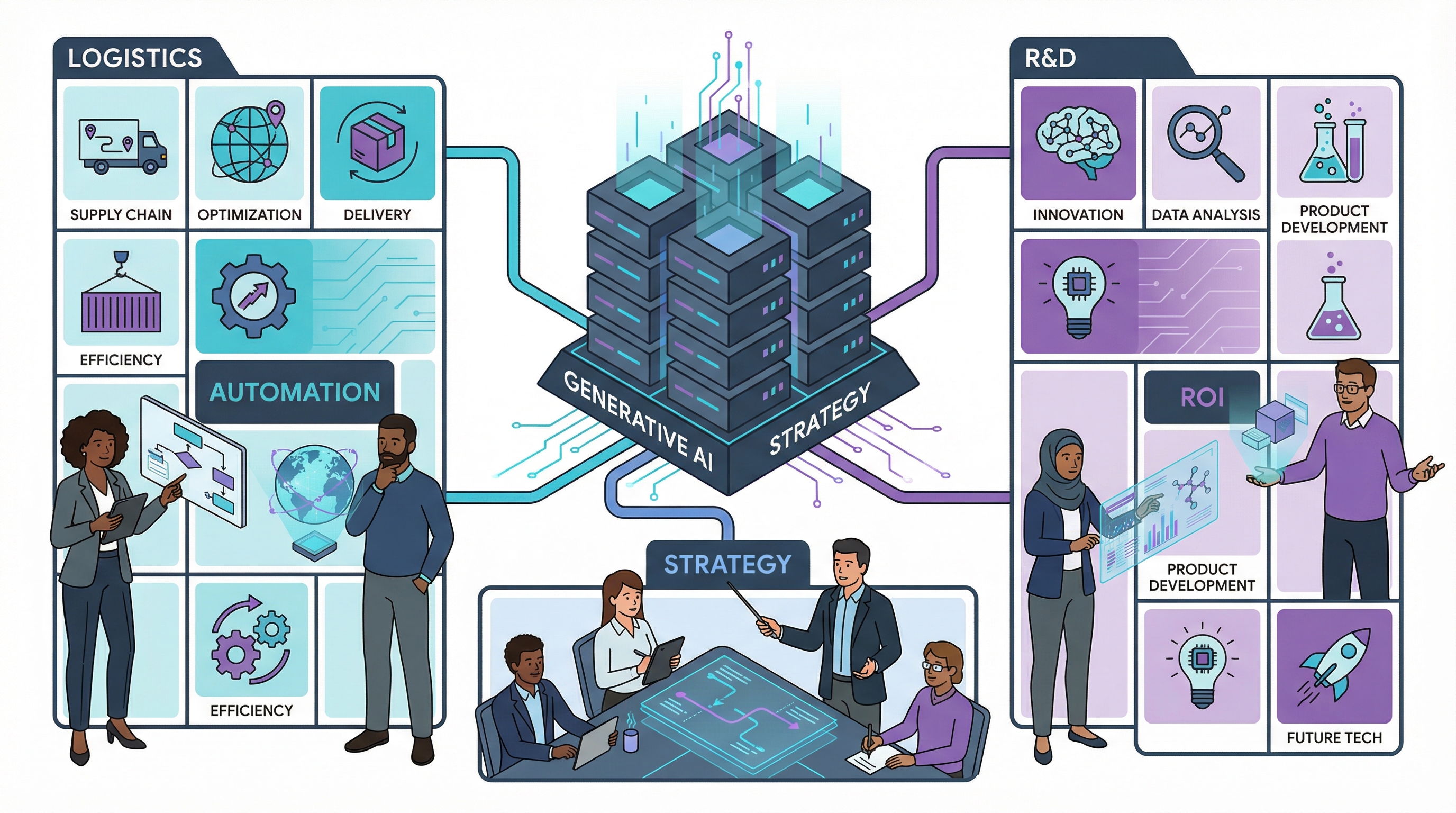
generative AI strategymoves far beyond the now-commonplace use cases of 2024, like simple content summarization or basic chatbots. In 2026, leading enterprises are focusing on deeply integrated applications that generate substantial, measurable ROI. These high-value
generative ai use casesare transforming core business functions: *
Operations:We're seeing the hyper-automation of complex supply chain logistics, where GenAI powers predictive digital twins to model and optimize operations in real-time. It's also used to generate high-fidelity synthetic data, allowing for robust testing of scenarios without risking live systems. This level of
workflow automation, often complemented by
robotic process automation, was theoretical just years ago. *
R&D:Generative models are accelerating material science, drug discovery, and engineering by generating and analyzing novel hypotheses at a scale impossible for human researchers. *
Marketing & Sales:AI is creating a deeply personalized
customer experiencethrough multi-touch customer journeys that adapt in real-time to user behavior. Dynamic pricing models, powered by GenAI, can now instantly adjust to thousands of market signals simultaneously. *
Software Development:The developer experience has been revolutionized. Advanced
AI agentscan now autonomously write, test, debug, and even document large, complex portions of codebases, drastically reducing development cycles well beyond simple code completion. ## Building an AI-Ready Culture for a Successful Generative AI Strategy Technology and governance are only two legs of the stool. A truly successful
enterpriseAI strategy depends on a profound cultural shift that empowers every employee to become a responsible AI collaborator. The focus of training has evolved accordingly. *
Upskilling & Reskilling:The conversation has moved beyond basic prompt engineering to "AI Systems Thinking." The goal is to train employees on
using generative aieffectively, how to collaborate with AI agents, how to critically validate AI-generated outputs, and how to identify new, strategic opportunities for automation. *
Ethical Guardrails:A successful culture is built on trust and clarity. This requires a clear, company-wide AI usage policy that is easily understood by everyone. It must define what constitutes acceptable
use of ai, what data sources are permissible for which tasks, and how all AI-generated content must be flagged for transparency. *
Incentivizing Innovation:The best ideas often come from the front lines. Enterprises must create structured internal programs, like innovation challenges or incubators, that reward employees for identifying and developing novel, high-impact GenAI use cases that align with the central, governed strategy and core
business objectives. ## Your Enterprise Guide to Generative AI Strategy: FAQ ###
Build vs. Fine-Tune: A Core Decision in Your Gen AI Strategy
For over 99% of enterprises, the answer is unequivocally to fine-tune. The immense capital investment, specialized talent, and years of research required to build a competitive foundation model from scratch are prohibitive and unnecessary. The real strategic advantage lies in leveraging your unique, proprietary data to fine-tune smaller, more efficient models for specific tasks, a market trend confirmed by Forrester. This approach delivers superior performance on your specific problems, enhances security, and generates a much higher ROI. ###
Aligning ROI with Business Objectives
In 2026, ROI measurement has matured beyond simple productivity gains. The best practice is to use a balanced scorecard approach that captures value across four key domains: 1)
Operational Efficiency:Quantifiable cost savings and time reduction in processes, like the 22% average gain identified by McKinsey. 2)
Revenue Generation:Attributable revenue from new AI-driven products, services, or enhanced sales capabilities. 3)
Risk Reduction:Cost avoidance calculated from mitigated compliance fines, prevented security incidents, or reduced operational errors. 4)
Innovation Velocity:Measurable reduction in time-to-market for new products and services. ###
The Most Critical Role for a Successful AI Implementation
While technical roles like the AI Engineer remain crucial, the "AI Ethicist & Governance Officer" has emerged as the most critical strategic position. This role is the essential bridge connecting the technical, legal, and business units. They are responsible for ensuring that all AI deployments align with complex global regulations (Gartner's #1 reported concern), core company values, and the vital AI TRiSM framework. This role is less about writing code and more about managing enterprise risk and building stakeholder trust, which are the ultimate enablers of sustainable AI adoption. ## Conclusion A winning
generative AI strategyin 2026 is not a matter of chance; it is deliberate, governed, secure, and deeply integrated into the fabric of the business to drive real
business value. The era of casual experimentation has given way to a mandate for strategic execution. The enterprises that will lead the next decade are those that build their AI initiatives on the unshakeable pillars of centralized governance, a smart portfolio of specialized models, proactive regulatory compliance, and a significant, non-negotiable investment in trust and safety. This framework is your roadmap. We encourage you to use it to audit your current approach and chart a course for genuine AI maturity. This is not just another IT project; it is a fundamental business transformation. The time to move from isolated tactics to an enterprise-wide strategy is now. If you're ready to build your roadmap,
contact usto see how our
AI strategy consultingservices can accelerate your journey.
Author Block