
In 2026, the digital storefront is the customer service center. Patience is no longer a virtue; it's a competitive liability. As technology continues to reshape customer expectations , the traditional call center queue has become a primary driver of customer churn and a significant threat to brand loyalty. Waiting on hold is a clear signal to customers that their time is not valued, an unforgivable misstep in an era of instant gratification.

Reducing call center wait time isn't just about operational efficiency—it's about survival. Companies that fail to adapt will be left behind by competitors who deliver seamless, immediate support. This guide outlines the essential, AI-driven, and proactive strategies modern businesses must adopt for cutting wait times , improving customer satisfaction , and meeting the demands of today's customers; here’s how to keep customers happy and loyal. We will explore how to leverage AI for call deflection, empower agents to resolve issues faster, implement proactive support models that solve problems before they start, and optimize workforce management for the new era of customer service.
Why Your Contact Center Must Reduce Wait Times to Improve Customer Experience
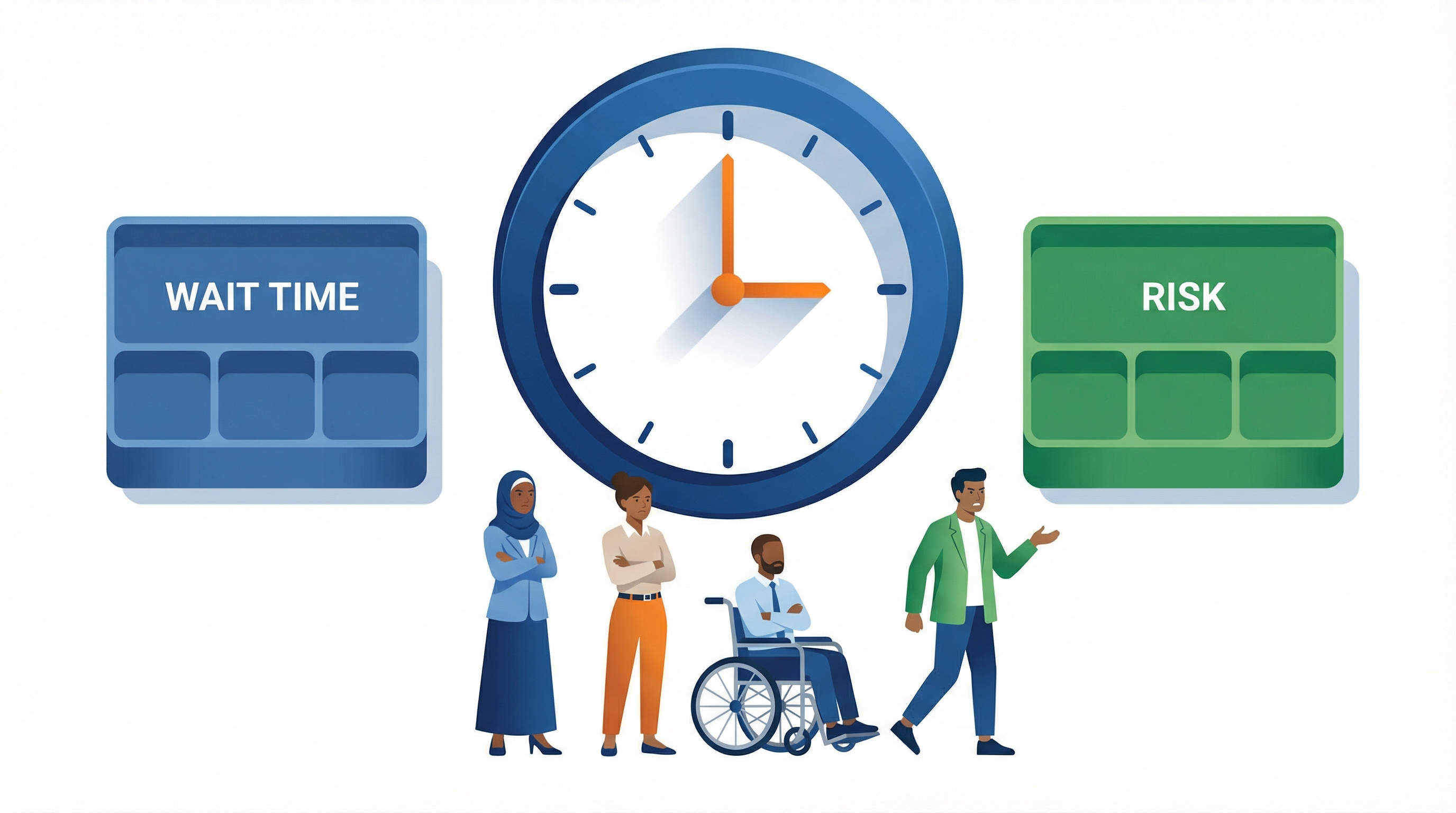
In the hyper-competitive landscape of 2026, the correlation between the call center experience , customer wait time , and business success has never been stronger. Today's consumers are empowered with endless choices and have developed a near-zero tolerance for friction. Experiencing a lengthy wait is more than a minor inconvenience; it's a direct catalyst for the risk of call abandonment and a significant drain on revenue, as few customers want to wait on hold .
Every second a customers spend in a queue erodes their loyalty and increases the likelihood they will seek out a competitor. This isn't just about losing a single sale—it's about losing a lifetime of value. The financial impact is staggering, as acquiring a new customer costs significantly more than retaining an existing one. Businesses must recognize that in 2026, the most critical metric for customer retention is often measured in seconds, not dollars. Investing in strategies to reduce wait times is a direct investment in the long-term health and profitability of the organization.
The High Cost of the Call Center Queue: Analyzing Customer Wait Times
The data paints a stark picture of modern consumer impatience. A landmark study revealed that 71% of consumers will consider switching to a competitor after just one instance of waiting too long —over 10 minutes—for a live agent. ( Source ) This is a dramatic acceleration from just a few years ago in 2023, when that figure was 58%, highlighting a rapidly intensifying trend.
The "why" behind this shift is clear: customers in 2026 expect instant, seamless resolutions across all digital channels. A long wait time is perceived as a fundamental failure of the company's customer service promise. It communicates inefficiency and a lack of respect for the customer's time, shattering trust and immediately damaging the brand's reputation in a highly connected world where customer feedback travels instantly.
How AI Self-Service Can Reduce Queue Times
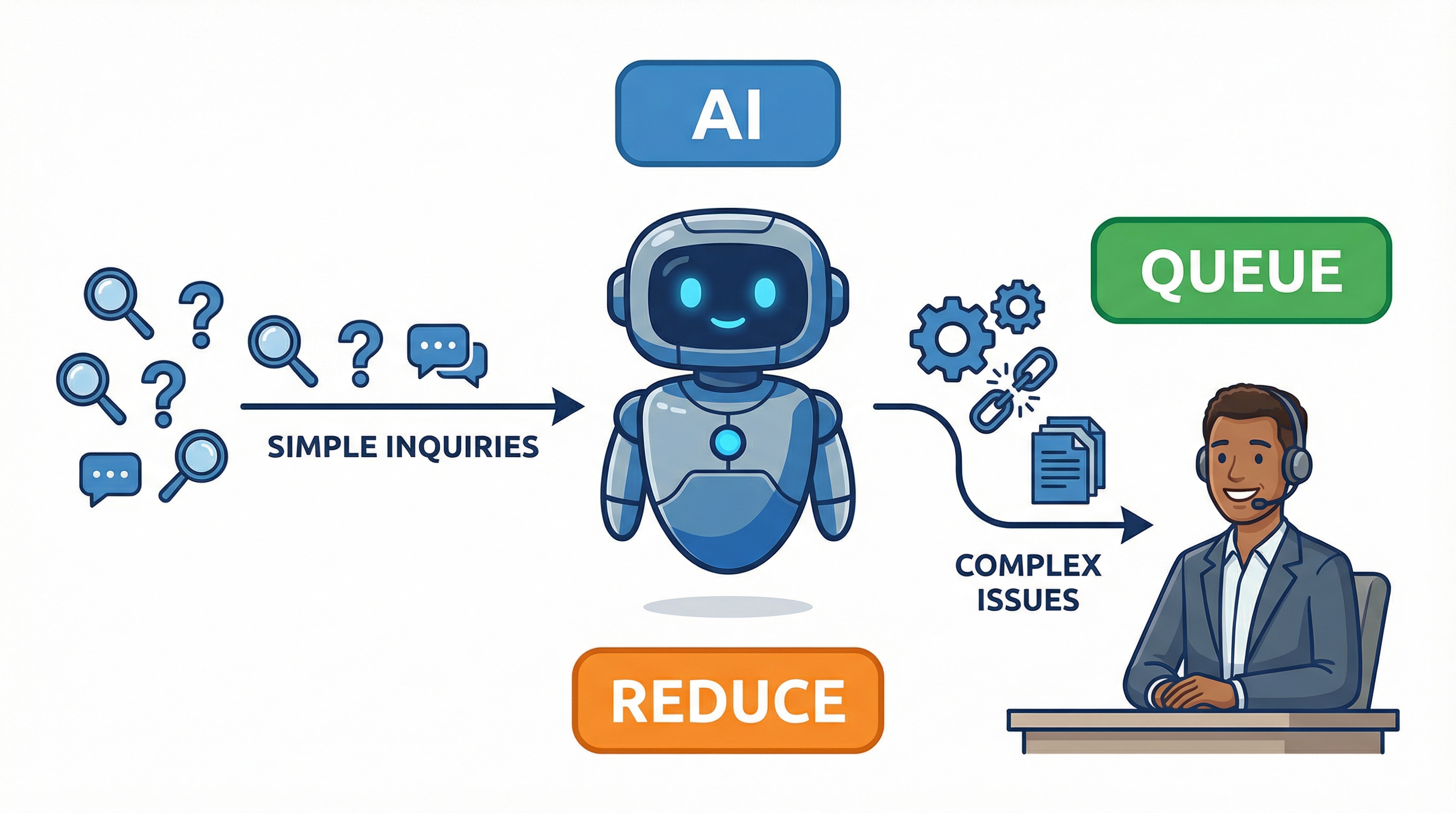
The most effective way to shorten a queue is to prevent people from ever needing to join it. The primary strategy to reduce wait times is to deflect simple and common inquiries away from live agents using intelligent, conversational AI tools. By automating the resolution of high-volume, low-complexity issues, businesses can free up their human agents to focus on the nuanced and emotionally-charged interactions that truly require their expertise and dramatically reduce queues.
This approach not only slashes wait time but also improves the overall modern call experience by providing instant answers 24/7. When customers can resolve their own issues quickly through a chatbot or knowledge base, their satisfaction increases, which serves to improve customer satisfaction across the board. This creates a more efficient ecosystem where live agent queues are reserved for complex problems, ensuring those who truly need to speak to an agent get help faster.
Using Generative AI to Drastically Reduce Your Call Center Queue
The impact of this strategy is no longer theoretical. Recent research shows that by 2025, generative AI-powered self-service channels will handle 35% of all initial customer service interactions. ( 2025 Report ) This directly reduces the volume of calls entering the queue for human agents, which is critical during periods of high call traffic.
Examples of these powerful tools include:
- Advanced Chatbots: Modern conversational AI can understand natural language, access customer data, and perform actions like checking an order status or processing a return; these tools allow customers to get help without human intervention.
- Conversational IVRs: Instead of confusing phone trees, customers can simply state their problem, and an AI-powered IVR can understand and ensure they are routed correctly or provide an automated answer.
- AI-Powered Knowledge Bases: These systems don't just host articles; they provide dynamic, personalized answers to user queries, guiding them to the right solution instantly.
Proactive Support: The Ultimate Strategy to Reduce Call Volumes
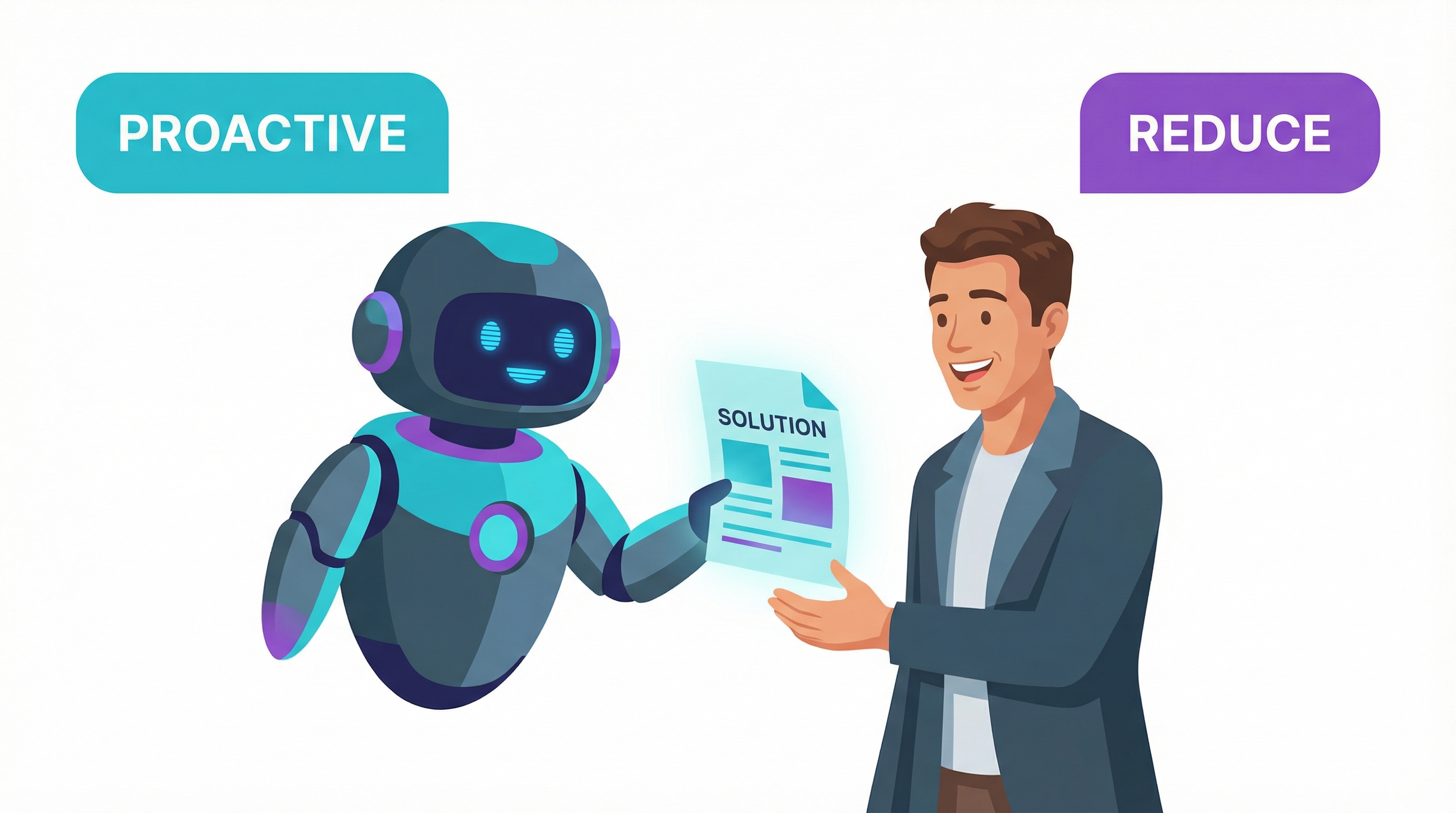
The most innovative companies of 2026 are moving beyond reactive support. Instead of waiting for a customer to experience a problem and call for help, they are using data and AI to anticipate issues and resolve them preemptively. This proactive approach is the ultimate way to reduce wait times because customers don’t need to make contact in the first place, reducing the need for reactive support.
By analyzing user behavior, system performance, and external data, businesses can identify potential friction points before they escalate. A proactive notification or an automated fix can enhance the customer experience and turn a potential complaint into a moment of customer delight, delivering a far better customer experience and boosting overall customer satisfaction . This fundamental shift in mindset transforms the call center from a cost center focused on problem-solving to a value-creation engine focused on building loyalty through exceptional, forward-thinking service.
Eliminate Wait Times for Customers by Solving Problems Proactively
The results of this strategic shift are compelling. A study from 2025 found that organizations deploying proactive support models reported a 22% reduction in reactive inbound call volume. ( Study ) This strategy "eliminates" the wait time by preventing the call from ever needing to be made.
Consider these powerful use cases:
- An e-commerce company’s system detects a potential shipping delay. It automatically sends the customer an SMS with a new ETA, an apology, and a 15% discount code for their next purchase.
- A SaaS provider’s monitoring tools identify an API error affecting a specific user group. The engineering team pushes a fix and sends an in-app notification to affected users *before* they even have a chance to submit a support ticket.
This level of service is made possible through sophisticated workflow automation and robotic process automation that connects disparate systems to create a seamless customer experience.
How AI-Powered Agents Deliver Faster Service for Cutting Wait Times
Once a customer does reach a live agent, the goal is a swift and effective resolution without sacrificing quality. Reducing Average Handle Time (AHT)—a key metric in effective call handling —is another critical lever for cutting down overall queue wait time . The faster an agent can successfully resolve one customer's issue and handle calls more efficiently , the faster they can become available for the next person in line, helping to clear out call queues .
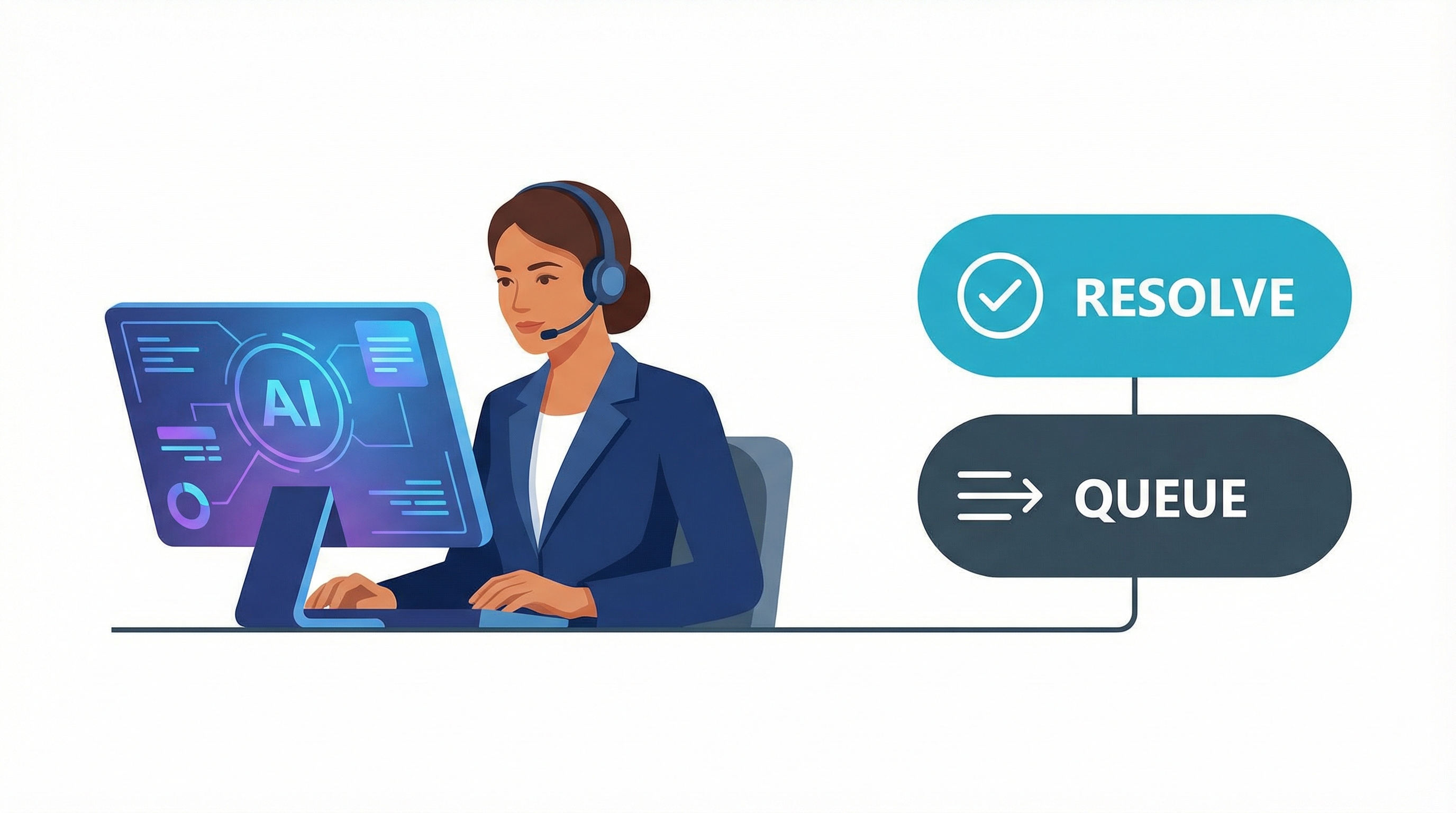
In 2026, this is achieved by equipping agents with powerful AI co-pilots. These tools work in the background during a call or chat, acting as an instant research assistant to streamline operations and workflows. They eliminate the need for agents to put customers on hold, reduce unnecessary call transfers , or consult with a supervisor, cutting down the average hold time . This real-time support empowers every agent, regardless of experience level, to perform like a seasoned expert, leading to faster resolutions, fewer repeat calls , and higher first call resolution rates.
How AI Assistance Drastically Shortens the Wait Times for Customers
The efficiency gains from this technology are significant. A recent analysis found that contact centers using AI-powered agent assistance tools saw a 28% decrease in Average Handle Time (AHT) in 2025, and this reduction in handling time has a direct impact on queue length. ( Reference ) This drastic reduction has a profound impact on queue length.
Here’s how it works: AI tools listen to conversations in real-time and automatically surface relevant information on the agent's screen. This can include:
- Knowledge Base Articles: The exact article needed to solve the customer's problem.
- Customer History: Relevant past purchases, tickets, and interactions.
- Step-by-Step Guides: Checklists for complex troubleshooting procedures.
This creates a dual benefit. The current call is resolved much faster, improving that customer's experience. Simultaneously, the agent is freed up to take the next call sooner, creating a positive ripple effect that ensures customers spend less time waiting and leads to shorter wait times for everyone in the queue. These smart assistants are a prime example of effective AI agents working alongside human teams. Successful implementation requires deep AI integration with existing CRM and knowledge management systems.
Improve Agent Performance with Modern Training to Reduce Wait Times
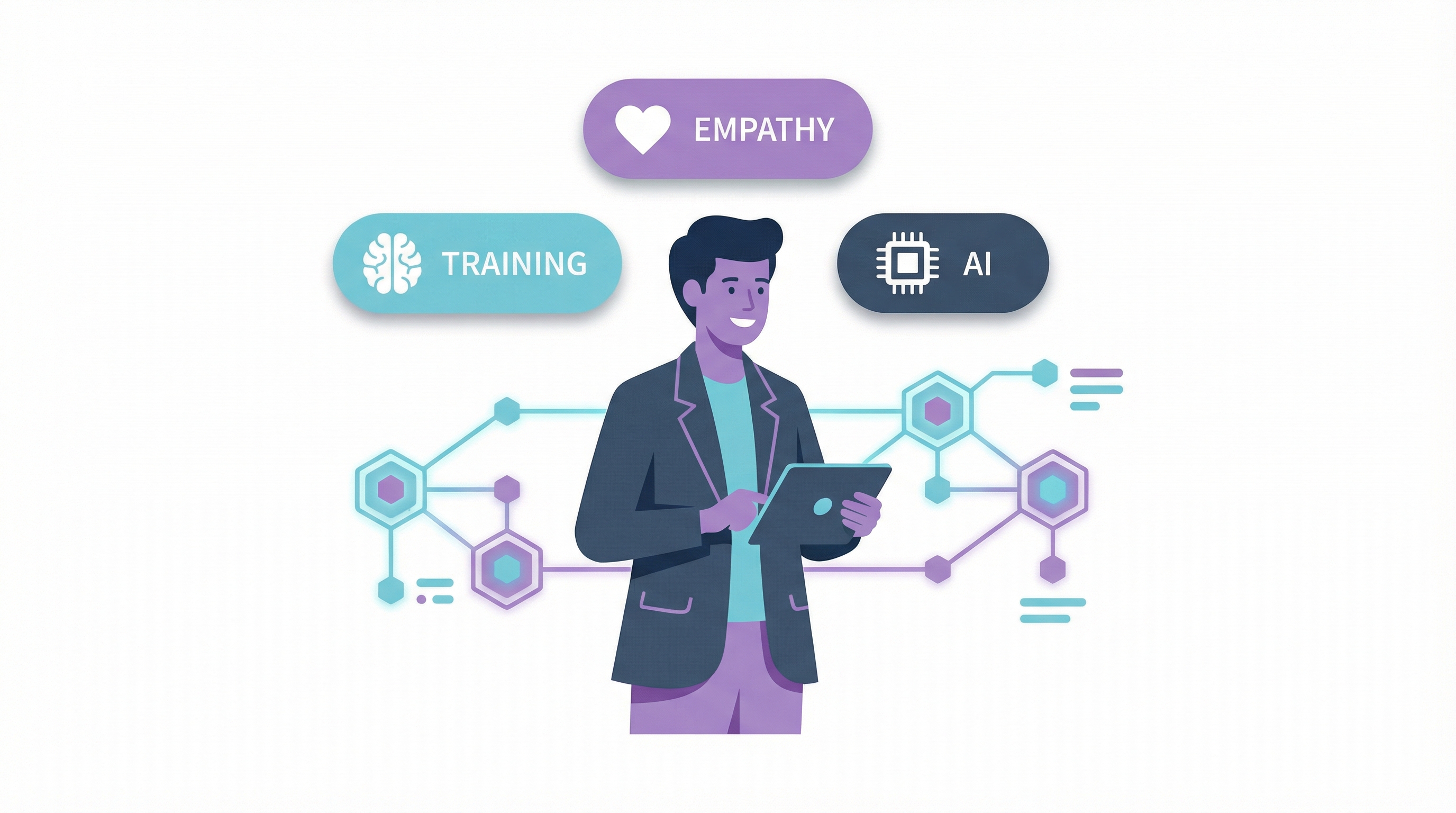
As AI continues to handle the bulk of simple, repetitive inquiries, the role of the human agent has fundamentally evolved. They are no longer script-readers; they are brand ambassadors and specialists in complex, high-empathy problem-solving. Consequently, training frameworks must adapt to build these advanced skills.
Streamline Training for Cutting Wait Times
The focus must shift from rote memorization of scripts to critical thinking and complex problem-solving to improve the customer’s interactions. Agents need to be empowered to make decisions and find creative solutions. Training should be delivered through continuous micro-learning modules , often pushed by AI based on performance metrics, to keep skills sharp and up-to-date. Crucially, empathy and de-escalation training are paramount, as agents will primarily handle frustrated customers on every call who have already bypassed self-service channels and expect a high-touch resolution that secures their customer satisfaction .
Intelligent WFM & Queue Management Systems: Solutions to Reduce Wait Times
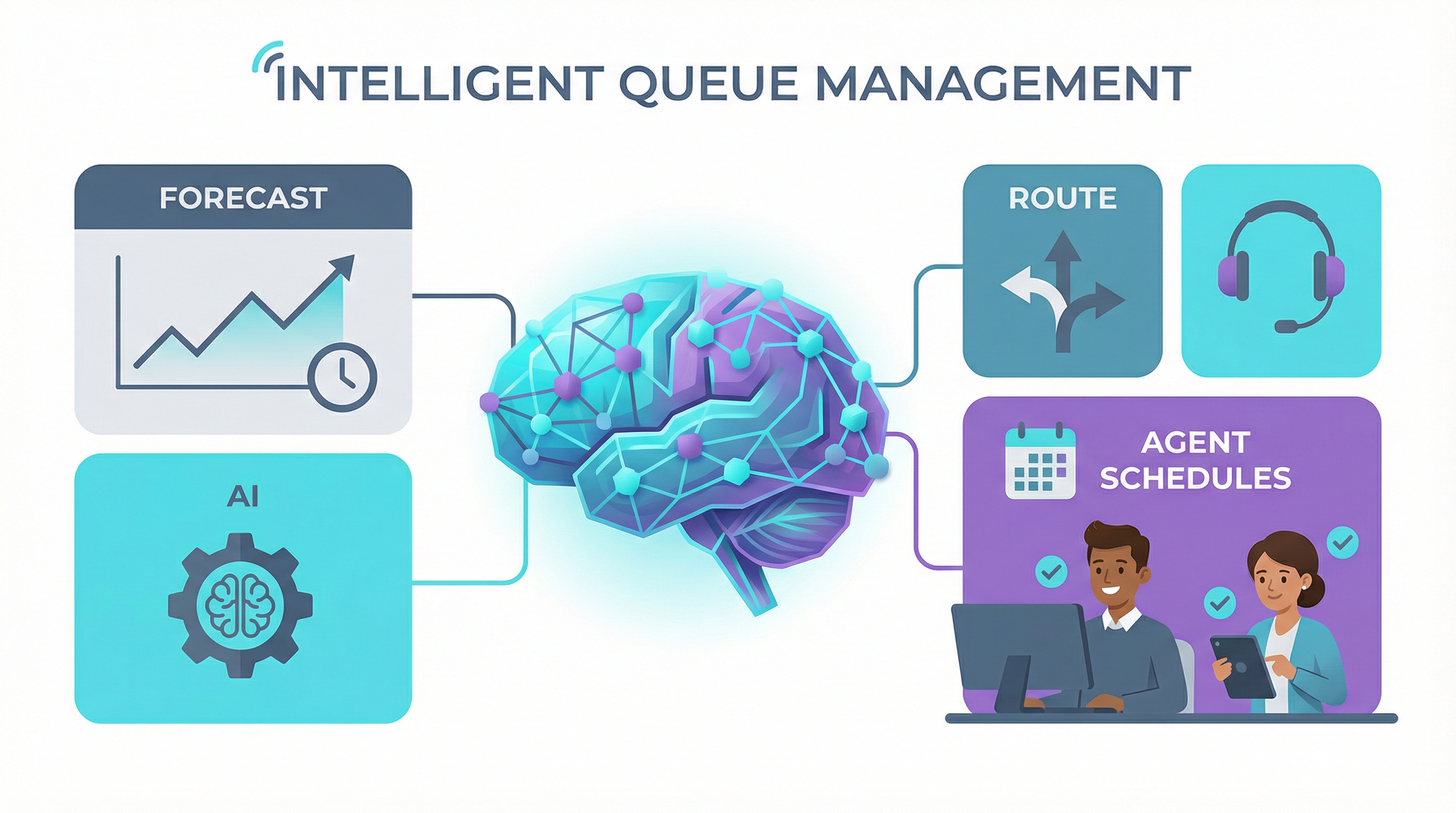
Even with the best technology, having the wrong number of agents at the wrong time is a direct path to long wait times. Understaffing during peak times with high call volumes is a primary cause of queue build-up. In 2026, optimizing workforce management (WFM) relies on data and AI to perfectly match agent availability with customer demand.
This involves using predictive analytics to forecast the number of calls , which could be in the thousands of calls during a promotion, based on historical data, time of day, seasonality, and even upcoming marketing campaigns. Armed with this insight, managers can implement flexible scheduling and skill-based, intelligent call routing , ensuring the right agent with the correct expertise is available precisely when they are needed most. Advanced call routing and contact center software can use this data to dynamically route calls to the most appropriate agent. This data-driven approach, powered by modern queue management systems and WFM tools, is the cornerstone of effective call management and helps streamline operations and minimizes idle times and improve service levels, boosting overall call center efficiency to prevent the bottlenecks that frustrate customers and strain your contact center .
FAQ on Reducing Call Center Wait Times
Q1: What is a good call center wait time in 2026?
A:
The gold standard is a
wait time
under 60 seconds. However,
with the data showing high churn rates after 10 minutes, anything consistently under 5 minutes is
acceptable for most industries. The ultimate goal should be a near-instant connection to the most
appropriate channel, whether that's an
AI
for a simple query or a human agent for a
complex issue.
Q2: How can small businesses reduce wait times without a huge budget?
A:
Small businesses can make a huge impact by starting smart. Implement a robust,
AI-powered knowledge base and an entry-level chatbot to deflect common questions—many platforms
offer affordable solutions. Focus on training a small, highly-skilled team to handle complex issues
efficiently. Finally, use the analytics available in your phone system to identify peak call times
and staff those hours accordingly.
Q3: Will AI completely replace call center agents?
A:
No. In 2026,
AI
is augmenting agents, not replacing them.
AI
excels at handling high-volume, low-complexity tasks with speed and accuracy.
This elevates the role of human agents, transforming them into brand specialists who manage the
complex, nuanced, and high-stakes customer interactions that require empathy, creativity, and
critical thinking.
Your Next Steps to Reduce Call Center Wait Times
The path to reducing call center wait times in 2026 is paved with intelligent technology and a proactive mindset. The winning formula is a strategic blend of AI-driven self-service for call deflection, AI-assisted tools to empower agents, and predictive models that solve issues before they ever arise. This holistic approach requires a clear vision and expert implementation, a journey best started with AI strategy consulting .
By embracing these strategies, companies can transform their contact centers from costly reactive necessities into efficient, loyalty-building engines that meet and exceed the expectations of the modern consumer. Don't let your customers wait. The time to act is now. So don’t wait to implement these essential strategies to improve your call center performance. The wait is over.
Author Block