
Running a small business often feels like juggling flaming swords while riding a unicycle. You are the CEO, the marketing director, the customer support agent, and occasionally, the janitor. The overwhelming workload leads many small business owners to burnout, limiting their ability to focus on high-level strategy. As technology advances, many realize they must use ai to keep up with the shifting marketplace. However, there is a practical solution that is no longer reserved for tech giants or Fortune 500 companies.

AI automation for small businesses has evolved from a futuristic concept into an accessible, everyday reality. In the context of Small and Medium-sized Businesses (SMBs), AI automation refers to the use of intelligent software to perform repetitive tasks, analyze data, and generate content without constant human intervention. It is the bridge between staying small and scaling up.
Our thesis is simple: Artificial intelligence is the great equalizer. It allows small teams to scale operations, drastically reduce overhead costs, and deliver enterprise-level customer experiences. In this comprehensive guide, we will explore the tangible benefits of automation, the best tools available, key areas for implementation, and a strategic roadmap to transform your business.
An Introduction to AI and Modern Efficiency
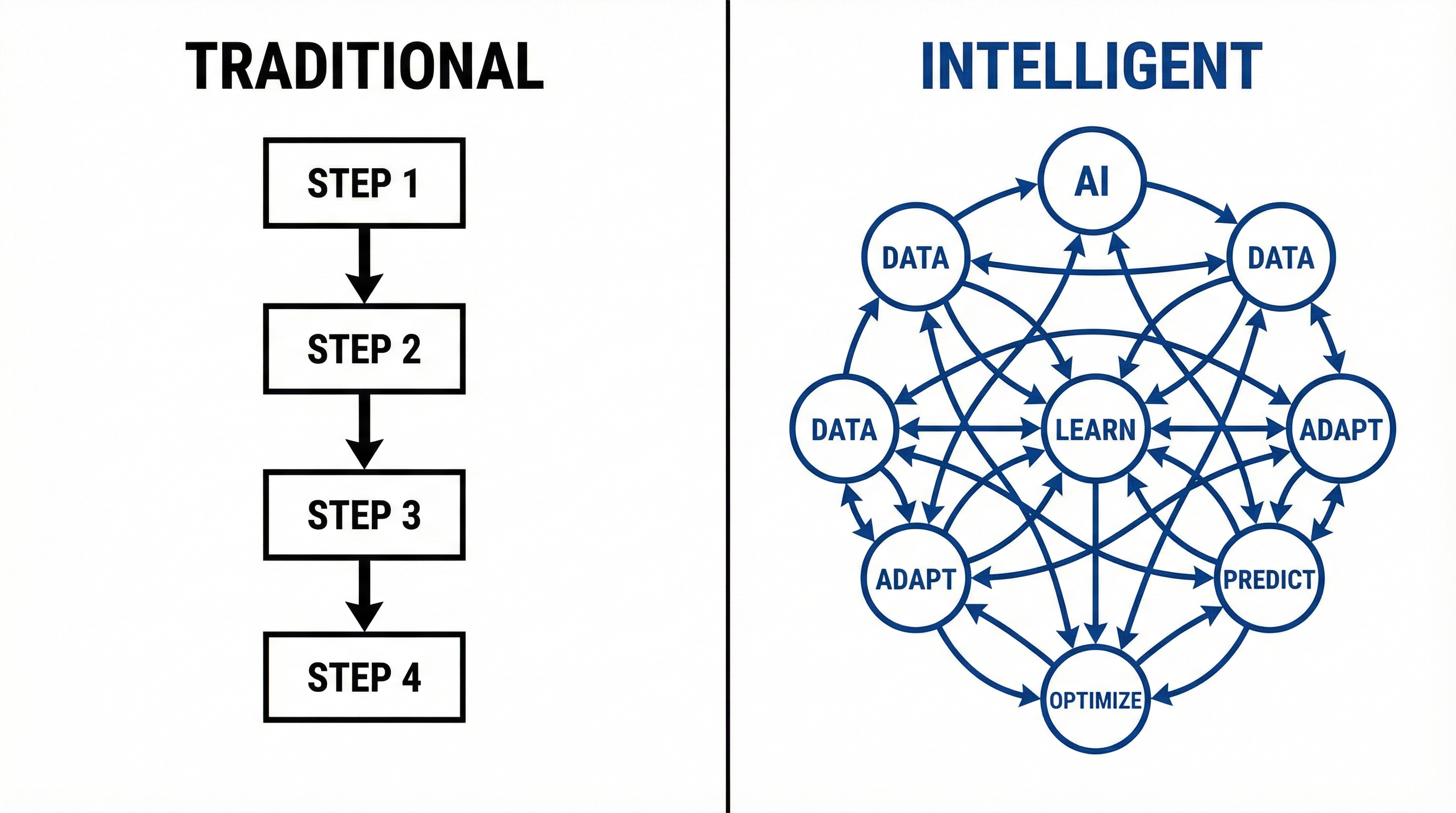
To leverage this technology effectively, one must first understand the distinction between traditional automation and true intelligent automation . For years, businesses have used basic tools to connect apps—for example, automatically saving an email attachment to a Dropbox folder. This is useful, but it is static. AI automation for small businesses takes this a step further by introducing intelligence and adaptability into the workflow through modern ai technology .
The shift is moving from manual data entry and simple "if-this-then-that" triggers to intelligent workflows that can learn, predict, and generate. Instead of just moving data from point A to point B, AI can analyze that data, draft a response based on the context, and suggest the next best action. This evolution allows business owners to offload cognitive load, not just mechanical clicks.
How AI Agents Differ from Basic Workflow Automation
Basic automation is rule-based; it follows a strict set of instructions and fails if a variable changes. It is excellent for rigid tasks. In contrast, AI automation mimics human decision-making. It uses Machine Learning (ML) and Natural Language Processing (NLP) to handle ambiguity.
For instance, basic automation sends a receipt when a purchase is made. AI automation analyzes the purchase history, drafts a personalized thank-you note, and recommends a complementary product based on buying trends. While Robotic Process Automation (RPA) handles the repetitive clicking and typing, AI provides the "brain" to understand what is being typed.
The Benefits of AI and Automation for SMBs
Why should a small business owner invest time and resources into AI? The answer lies in the limitations of human capital. There are only so many hours in the day, and hiring new staff is expensive. Automation breaks these physical limits. Today's automation platforms allow small businesses to compete at a global scale. This shift enables small businesses to reinvest their savings into innovation.
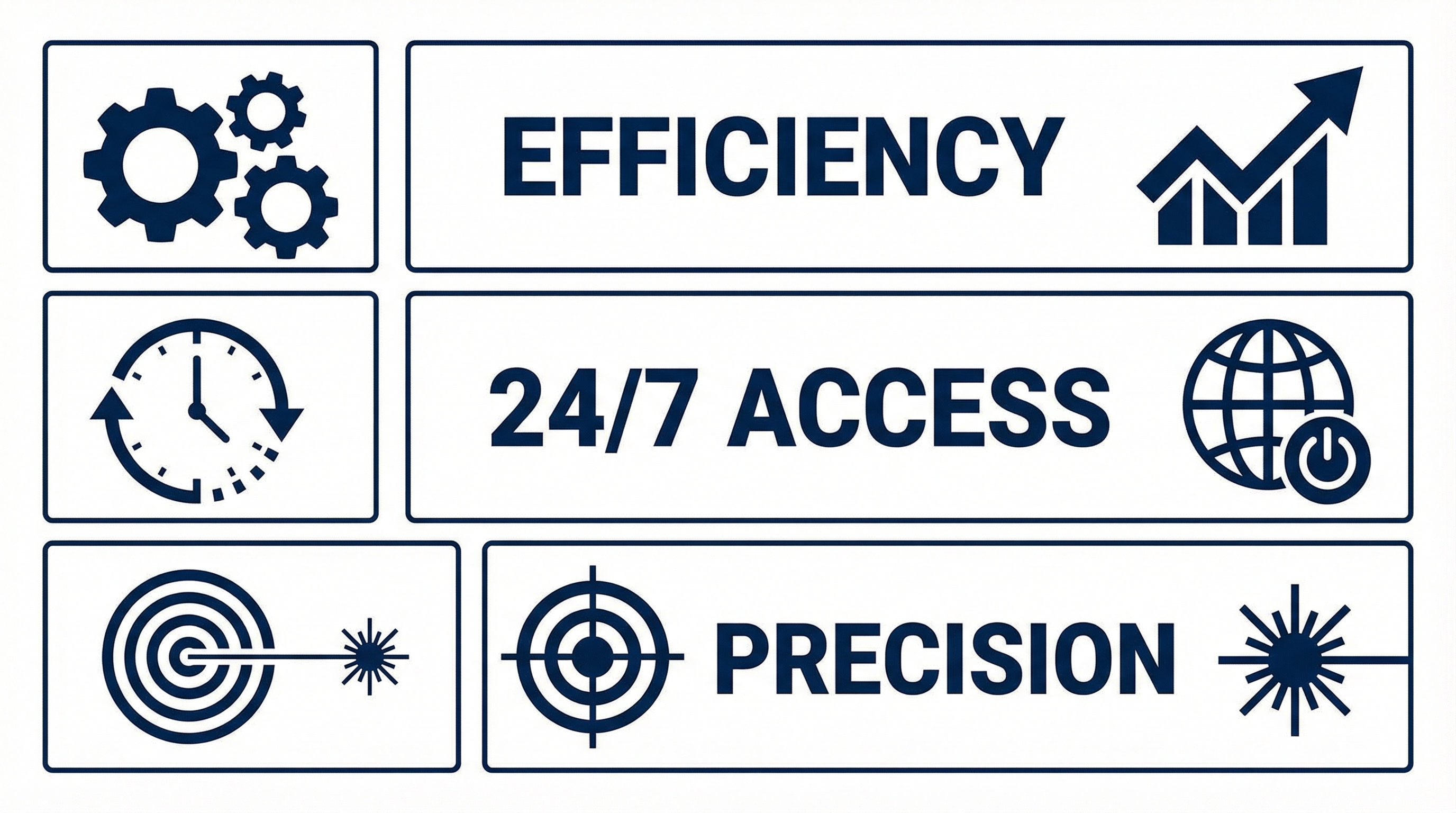
Cost Efficiency is the most immediate benefit. By employing AI tools, businesses can handle the workload of a much larger administrative staff without the associated payroll taxes, benefits, or training costs. This doesn't necessarily mean firing staff, but rather repurposing them for higher-value creative work.
24/7 Availability is another game-changer. Your business should not stop running when you go to sleep. AI agents and bots can engage visitors, process orders, and answer queries at 3 AM just as effectively as they do at 3 PM. This captures revenue that would otherwise be lost to competitors who are "always on."
Furthermore, Error Reduction is critical for profitability. Humans get tired, distracted, and bored. This leads to typos in data entry, missed invoices, or forgotten follow-ups. Automated systems do not suffer from fatigue; they execute tasks with mathematical precision every single time. When companies leverage ai , they ensure consistency across every touchpoint.
Finally, there is Scalability . If your customer base doubled tomorrow, would your current team crumble under the pressure? AI automation for small businesses allows you to handle 10x the volume without 10x the stress, creating an infrastructure that grows with you.
Strategic AI Use Cases for Implementation
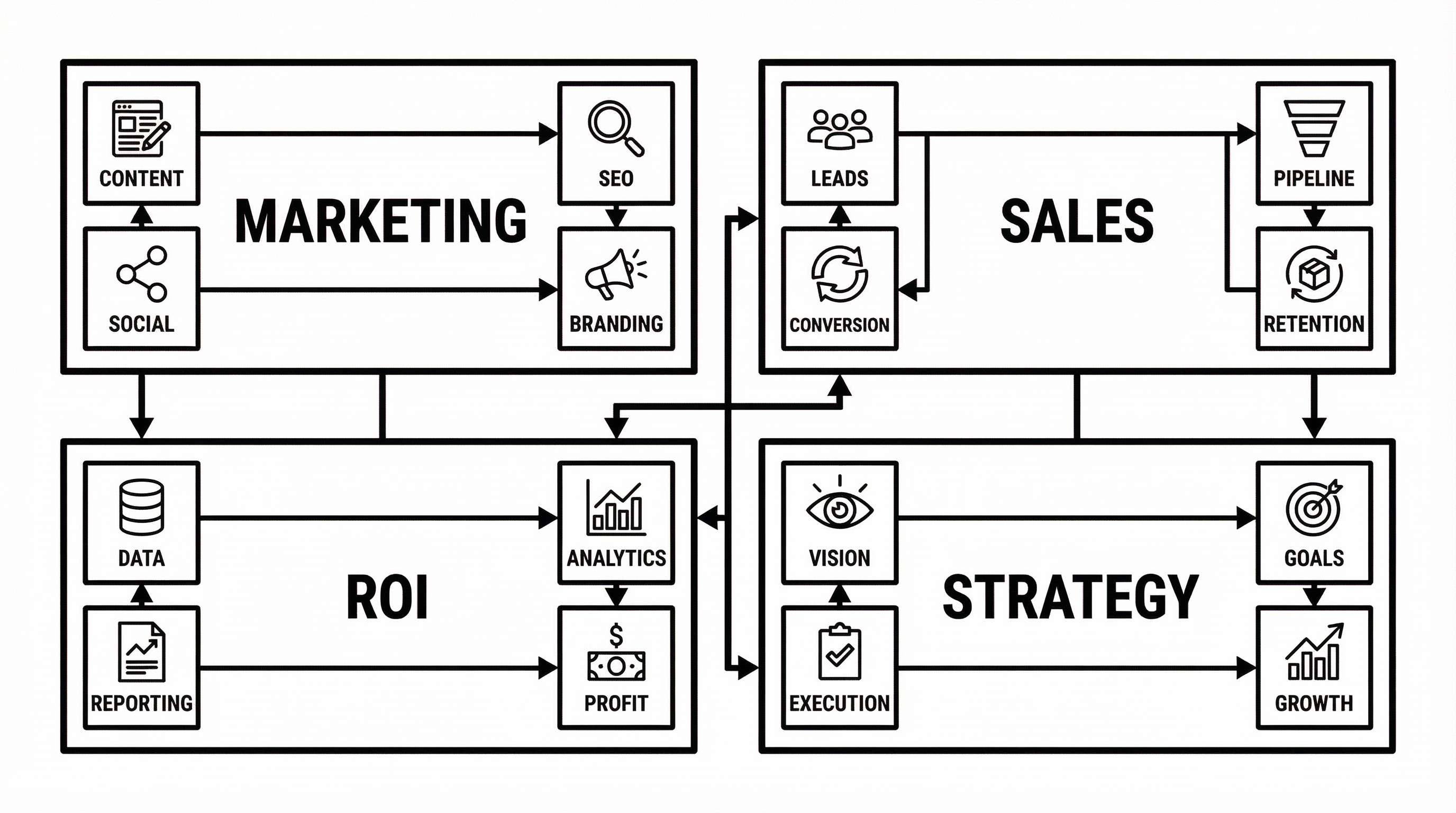
Implementing AI indiscriminately can lead to confusion. To maximize Return on Investment (ROI), you should focus on departments where repetitive tasks consume the most time. Integrating small business ai solutions ensures that your team stays focused on growth rather than maintenance. Here are the four pillars where AI yields the highest impact.
Using the Best AI for Marketing and Content Creation
Marketing is often the first bottleneck for small teams. Generative AI has revolutionized this space. Tools can now draft blog posts, create social media captions, and even design graphics in seconds. Instead of spending hours brainstorming, you can act as an editor, refining AI-generated content to match your brand voice. By adopting marketing automation , you can ensure your brand remains active without manual posting.
Beyond content, AI facilitates hyper-personalization. Email marketing platforms can now optimize send times for individual subscribers and dynamically change email content based on the user's past behavior, significantly increasing open and conversion rates.
How to Automate Sales and Lead Scoring
Chasing cold leads is a massive drain on resources. AI helps by automating the top of the sales funnel. Intelligent CRM systems can track user behavior on your website and assign a "score" to each lead.
By utilizing Lead Generation AI tools, your sales team can focus strictly on prospects who are ready to buy, rather than cold calling uninterested parties. Furthermore, automated follow-up sequences ensure that a potential client never slips through the cracks simply because a salesperson got busy.
Deploying AI Agents for Customer Support
Consumer expectations have shifted; they demand instant gratification. Implementing Conversational AI and chatbots on your website allows you to resolve approximately 80% of routine queries instantly.
Unlike old "decision tree" bots, modern AI agents understand context and intent. They can handle returns, check order statuses, and answer FAQs. If a query is too complex, the AI seamlessly hands the conversation off to a human agent, providing the human with a full transcript of the interaction so the customer doesn't have to repeat themselves.
Optimizing Administrative Workflow with AI
The "back office" is where efficiency often goes to die. Workflow Automation can revolutionize administrative tasks. AI can scan incoming invoices, extract the data, and input it into your accounting software.
Appointment scheduling is another prime candidate. AI assistants can coordinate calendars between multiple parties to find open slots, eliminating the tedious email ping-pong of "does Tuesday at 2 PM work?" This frees up hours of time every week for business owners to focus on growth strategies.
Best AI Automation Tools for Small Businesses
You do not need enterprise-grade software costing thousands of dollars a month to get started. The current landscape is filled with powerful, accessible tools designed for agility. Robust ai systems are now available for a fraction of their previous cost.
- Content & Marketing: ChatGPT and Jasper for copywriting; Canva Magic Studio for visual assets. These tools democratize high-quality content creation.
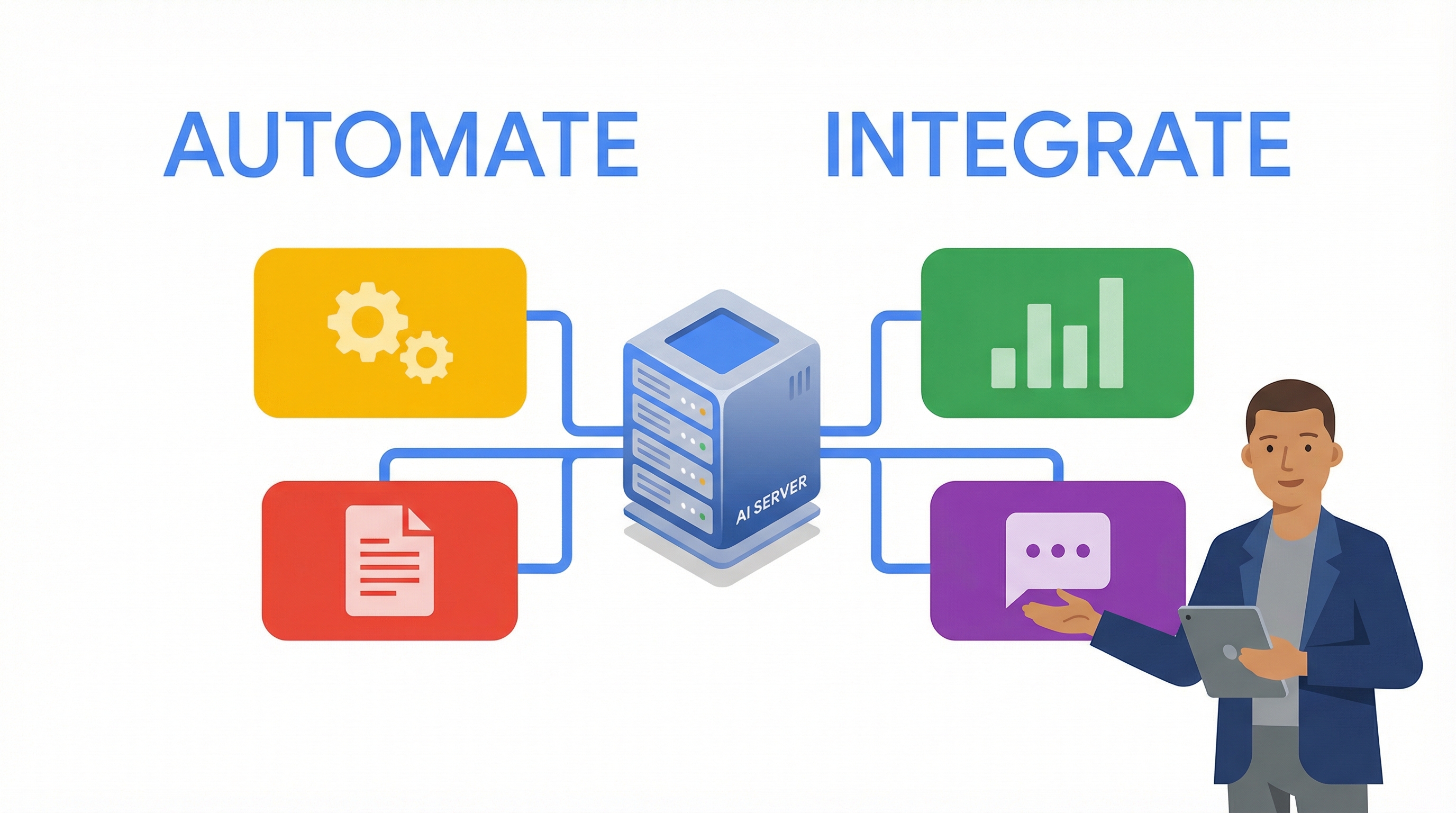
- Process Automation: Zapier and Make (formerly Integromat). These act as the glue between your apps, allowing you to build complex automated sequences without writing code.
- CRM & Sales: HubSpot and Salesforce Essentials now include baked-in AI features that assist with drafting emails and analyzing pipeline health.
- Customer Service: Intercom and Chatfuel offer robust bot functionalities that are easy to deploy and train on your specific business data.
To truly leverage these platforms, effective AI Integration is key. Ensuring your CRM talks to your email marketing tool, and your chatbot talks to your inventory system, creates a unified ecosystem.
What Small Businesses Need for Implementation
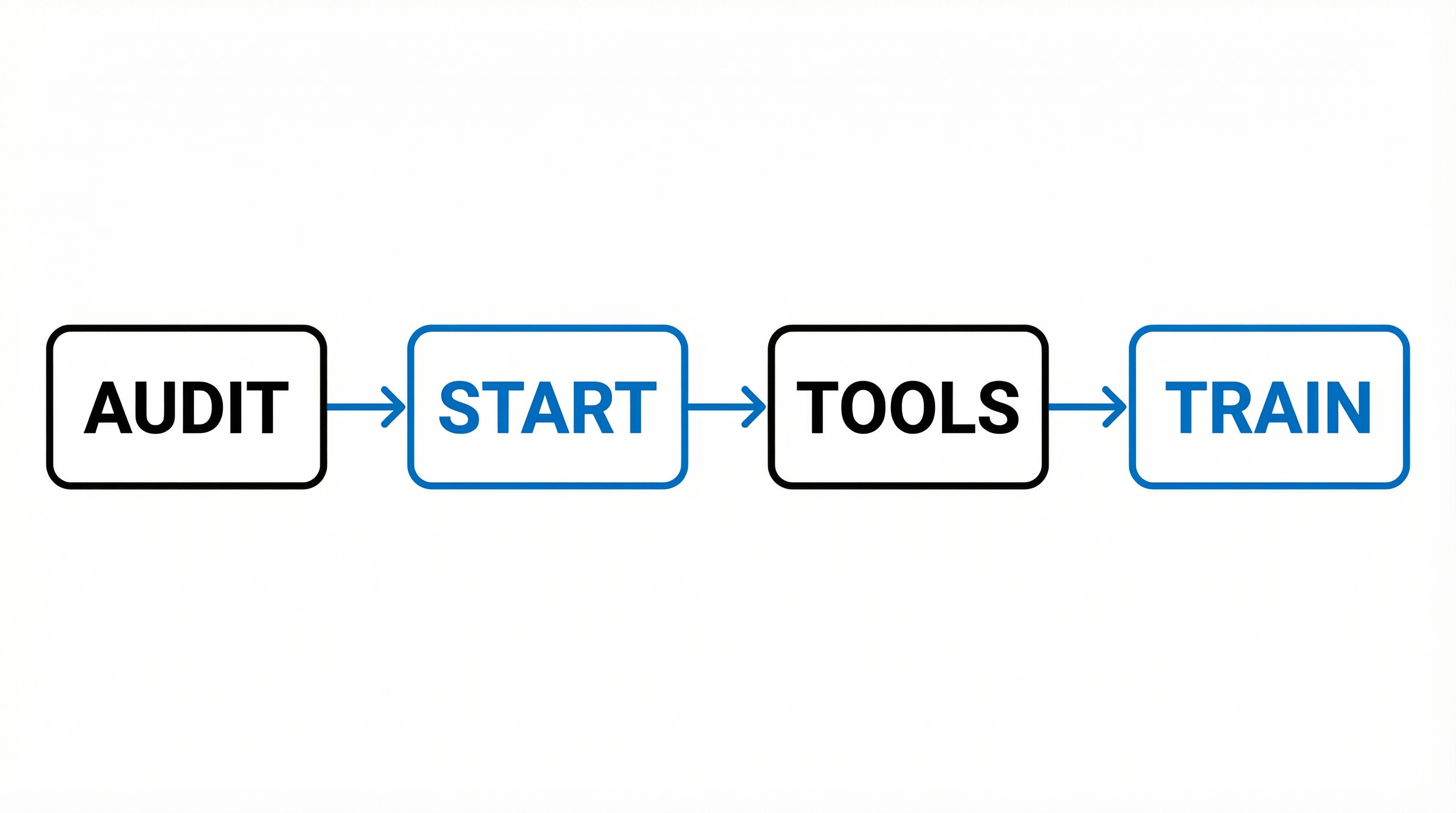
Starting with AI can feel daunting. The secret is to avoid trying to automate everything at once. Identifying exactly what small businesses need to succeed is the first step toward a digital transformation that empowers businesses to automate their most tedious operations. Follow this step-by-step strategy to ensure a smooth transition and help small businesses achieve their long-term vision.
Step 1: Audit Current Processes. Identify your "time vampires." Spend a week logging your tasks. Which activities are repetitive, rule-based, and consume large chunks of time? These are your prime targets.
Step 2: Start Small. Pick one process to automate first. Perhaps it is scheduling social media posts or automating invoice reminders. Proving the concept with a small win builds confidence and momentum.
Step 3: Select the Right Software Stack. Choose tools that integrate well with your current systems. Look for user-friendly interfaces and strong customer support. Don't overcomplicate your tech stack early on.
Step 4: Train the Team. This is crucial. Your team may fear that AI Agents are there to replace them. Reassure them that AI is a tool to remove the boring parts of their job, allowing them to focus on creative and strategic work. If you need assistance navigating this cultural shift, AI Strategy Consulting can provide a roadmap tailored to your organization.
The Impact of AI Challenges on Growth
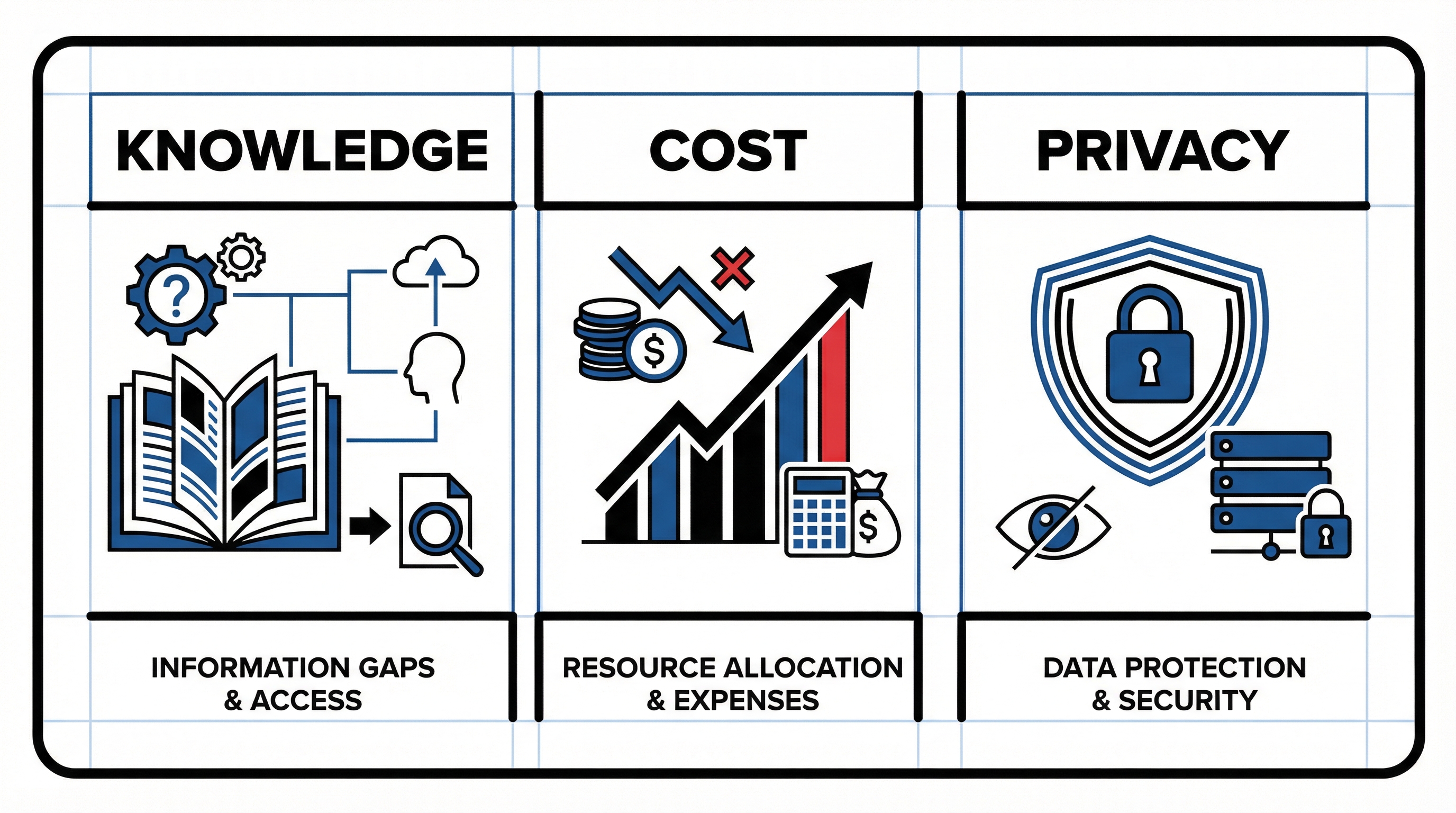
Despite the benefits, hurdles exist. A common barrier is the perceived lack of Technical Knowledge . Many owners believe they need to be coders. The reality is that the "No-Code" movement has made AI accessible to everyone with basic computer literacy. For small businesses looking to gain an edge, these tools help small teams achieve massive results with limited staff.
Cost Concerns are also prevalent. However, when you compare the monthly subscription of an AI tool to the cost of hiring a new employee to do the same work, the ROI is usually immediate. Finally, Data Privacy must be respected. Ensure you are using reputable tools that comply with GDPR and data protection standards to keep your customer information safe.
FAQ: AI Automation for Small Businesses
Is AI automation expensive for small businesses?
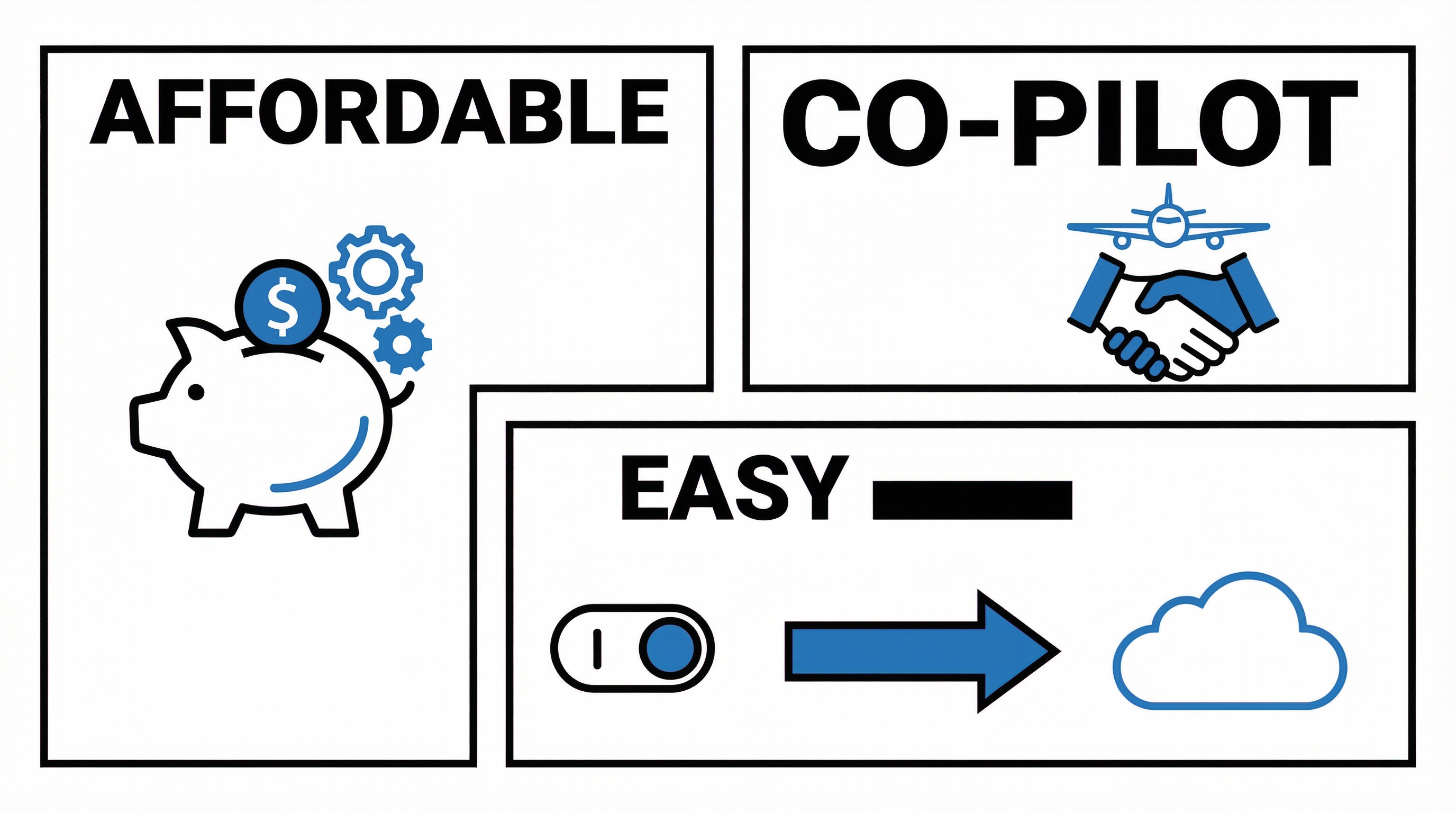
Not anymore. Most tools operate on a SaaS (Software as a Service) model with affordable monthly fees. The Return on Investment usually covers the cost within the first month by saving valuable man-hours.
Will AI replace my employees?
Unlikely. AI is best viewed as a "co-pilot." It handles the mundane data entry and sorting, freeing your humans to do what they do best: build relationships, think creatively, and solve complex problems. Understanding how
automation for small businesses works
helps in reassuring the workforce.
Do I need technical skills to set up AI automation?
No. Most modern platforms are "drag-and-drop." If you can sketch a flowchart on a napkin, you can build an automation workflow on platforms like Zapier.
What is the best process to automate first?
We recommend starting with email marketing sequences or appointment scheduling. These are high-volume, low-complexity tasks that provide immediate relief to your schedule.
Conclusion
To recap, embracing AI automation for small businesses is no longer a luxury—it is a necessity for remaining competitive in a fast-paced market. It reduces costs, eliminates errors, and scales your ai capabilities instantly. The technology is here to stay, and the businesses that adopt it early will reap the biggest rewards.
Don't let the technical jargon intimidate you. Audit your daily tasks today and identify one repetitive action to hand over to AI this week. If you are ready to transform your operations but aren't sure where to begin, Contact us today to discuss your future.

Author Block