html

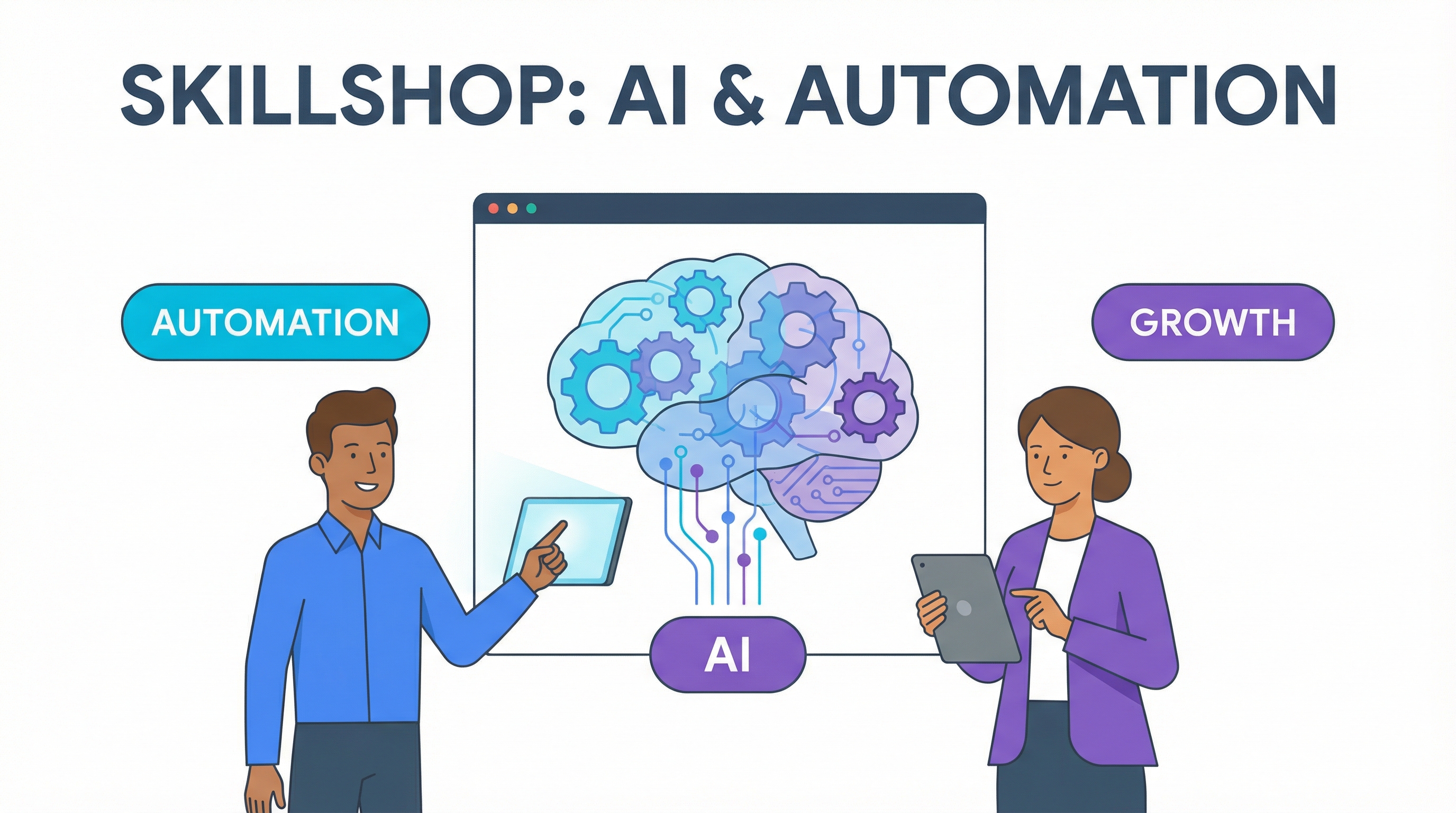
In 2026, the concept of a static digital storefront is obsolete. The new standard for digital excellence is the AI Automation Website —a dynamic, intelligent, and predictive platform that anticipates user needs and automates engagement in real-time. This is no longer a futuristic concept; it is the established benchmark for competitive success.
Businesses still relying on manual updates, generic content, and reactive customer service are falling behind at an exponential rate. The digital landscape has fundamentally shifted, and a passive online presence is now a significant liability.
This guide provides a comprehensive blueprint for conceptualizing, building, and leveraging an AI Automation Website. We will explore the core technologies, strategic benefits, and actionable steps to transform your digital presence into an autonomous engine for growth, personalization, and unparalleled operational efficiency. In today's market, this is a competitive necessity, not a luxury .
What is an AI Automation Website? Defining Your New Platform
In the context of 2026, an AI Automation Website is far more than a site with a basic chatbot or simple personalization tokens. It is a fully integrated ecosystem where artificial intelligence with advanced ai capabilities manages the entire content lifecycle, automates the user journey, optimizes conversions, and handles complex customer interactions using complex ai without direct human intervention, making it a powerful automation tool . This ai-powered system is designed around a sophisticated workflow automation and advanced ai orchestration that connects every user touchpoint with backend business logic.
This intelligent platform is built on three key pillars:
- Predictive Personalization: The ai-powered AI anticipates user intent based on behavior, firmographics, and historical data. It dynamically alters the user interface, recommended content, and even promotional offers to match what each unique visitor is most likely to need next.
- Generative Experience: Content and interface elements are no longer static. They are created on-the-fly by generative AI using natural language to match specific user profiles, search queries, and journey stages, ensuring maximum relevance and engagement.
- Autonomous Operations: Critical backend processes are fully automated. This includes continuous A/B testing of layouts, real-time SEO meta-tagging based on trending keywords, and intelligent lead routing to the correct sales or support channels, often through an integration with a CRM like Hubspot .
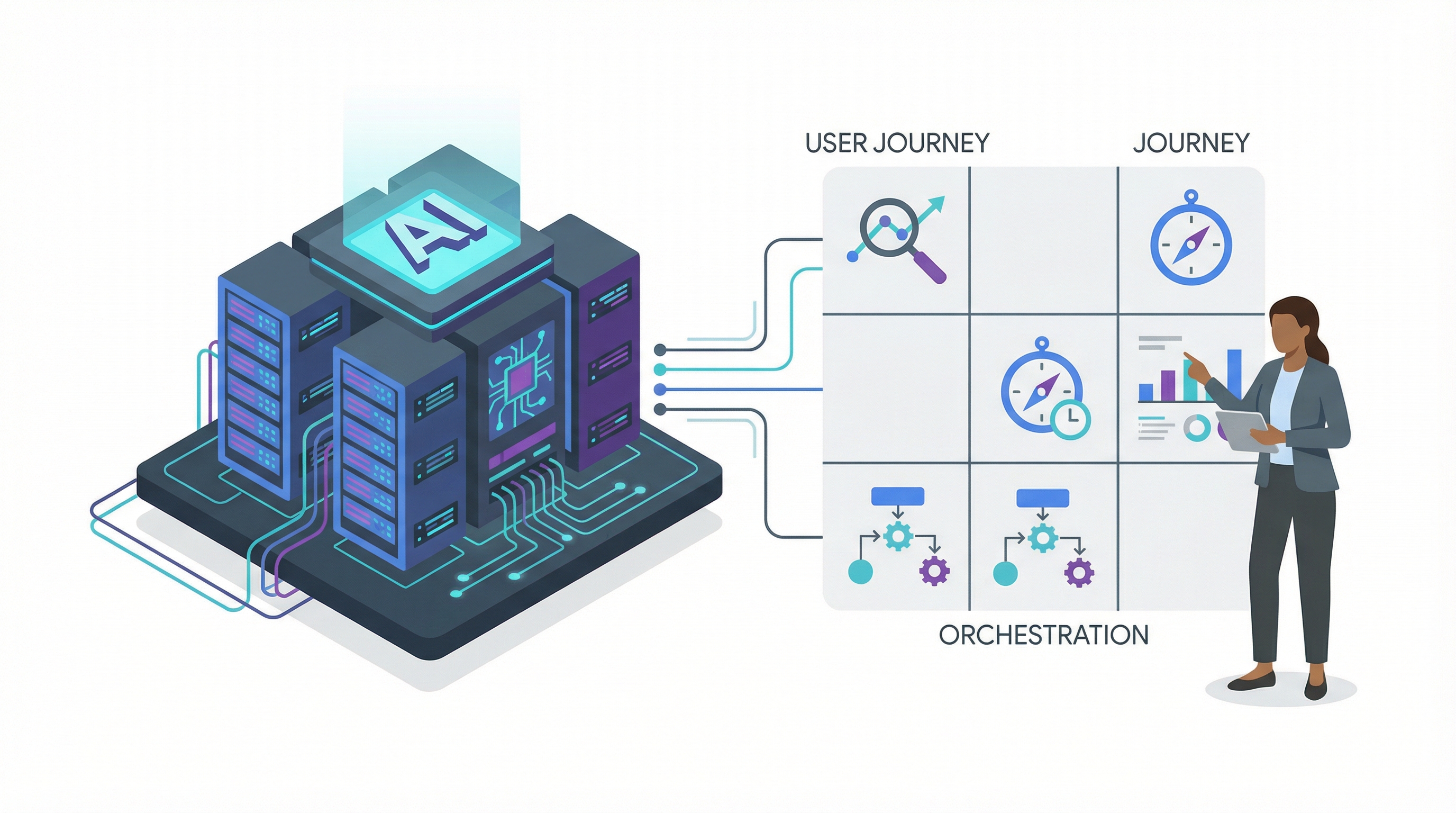
How AI Workflow Automation Redefines the Customer Journey
The engine driving the modern website is hyperautomation . The goal has evolved from simply providing information to creating a completely frictionless, intelligent, and personalized journey for every visitor, from their very first click to becoming a loyal, repeat customer.
Why AI Automation is a Multi-Billion Dollar Opportunity
The global market for hyperautomation is projected to surpass $35.8 billion this year, a clear indicator of its massive business impact ( Source ). A significant portion of this investment is being funneled directly into automating digital customer experiences, with the corporate website serving as the primary interface.
This represents a monumental shift from simple task automation and the need to automate repetitive tasks with tools like basic email triggers or traditional robotic process automation , to complex process automation. An important use case is when AI can qualify leads in real-time based on browsing behavior, personalize pricing models dynamically, and initiate complex support workflows, a critical use case to save time and improve service. An ai agent can now manage intricate tasks that once required a dedicated human team.
The ROI of AI Automation: Unlocking Tangible Website Growth
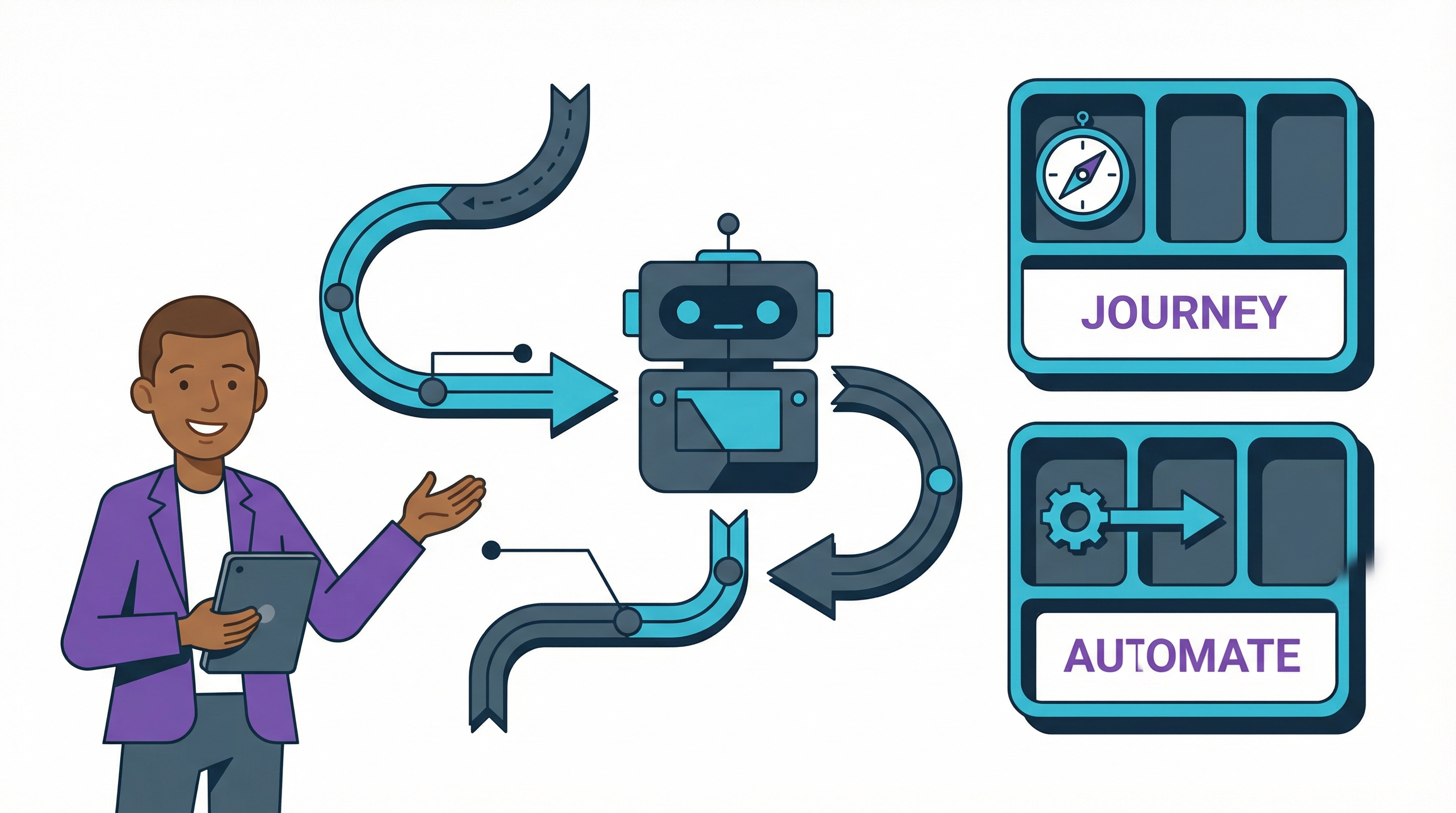
Adopting an AI Automation Website is not a cost center; it harnesses the power of AI to automate ai processes, driving revenue, customer loyalty, and operational efficiency. In 2026, the competitive gap between businesses that have embraced ai automation and those that haven't is no longer a gap—it's a chasm.
How the Best AI Automation Drives Revenue and Satisfaction
Research from leading analysts confirms the immense value of this transition. A McKinsey study projected that organizations leveraging enterprise-grade ai to automate and personalize their customer experiences see a 25% or greater increase in both revenue and customer satisfaction ( Study ).
This dramatic uplift is driven by several key factors:
- Revenue Growth: These ai-powered tools execute flawless cross-selling and upselling based on predictive analytics. They autonomously run thousands of micro-experiments to optimize conversion rates (CRO) and can even deploy dynamic pricing strategies based on demand and user profile.
- Satisfaction Boost: Customers receive 24/7 intelligent support through advanced Conversational AI that resolves complex issues. They are served hyper-personalized content that proactively solves their problems, and they navigate a frictionless website that constantly adapts to their needs.

Integrating Generative AI: The Engine of Your AI Automation Website
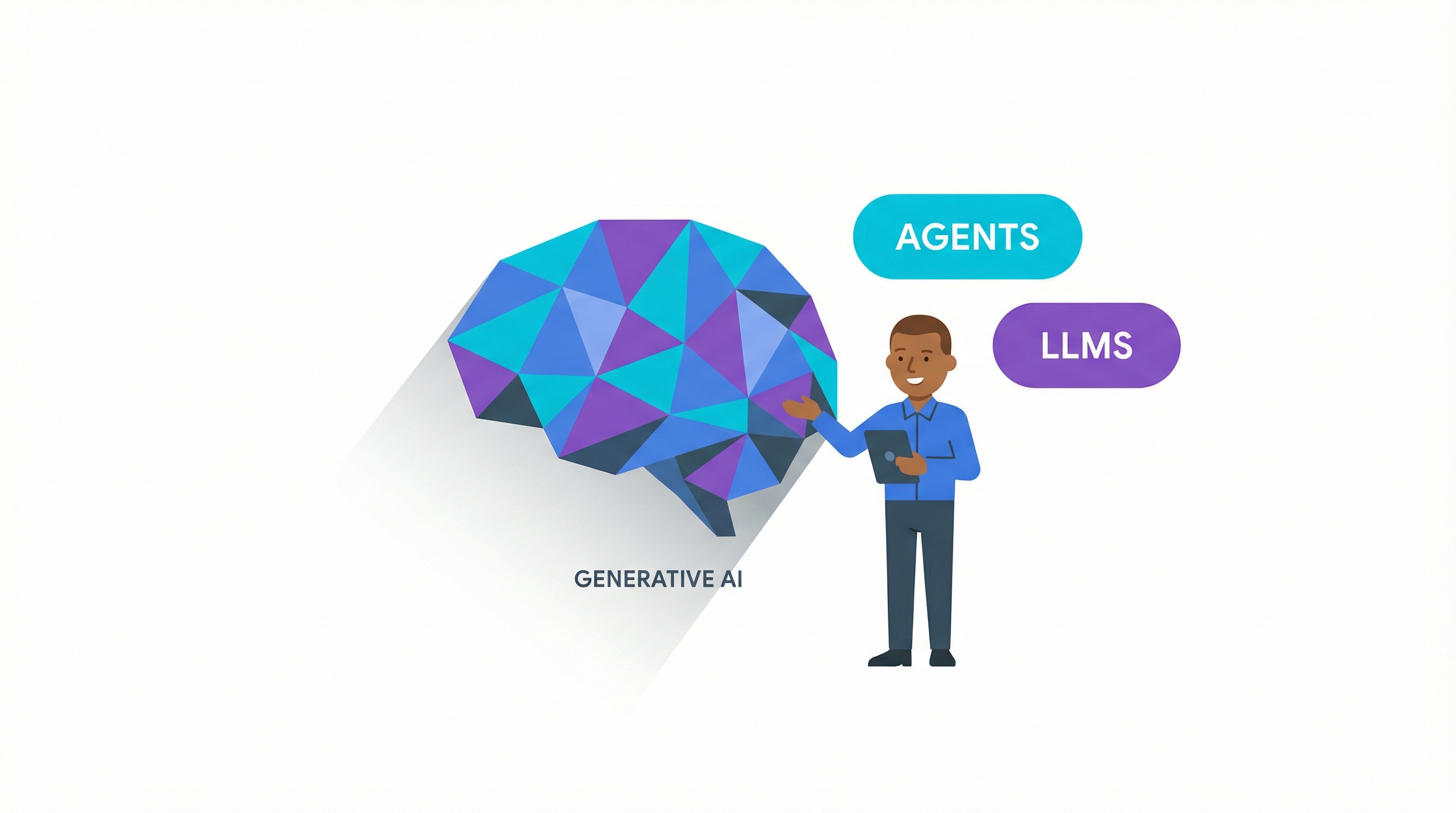
If hyperautomation is the engine, Generative AI is the creative force behind the modern automated website. It transforms a website from a static content repository into a dynamic content creator, ensuring every interaction is fresh, relevant, and tailored to the individual.
The New Reality: From Dynamic Content to Conversational AI Agents
The adoption of this technology is no longer an outlier. According to Gartner, by 2026, over 80% of enterprises are actively using generative AI apis or have deployed GenAI-enabled applications powered by advanced large language models and llms in their production environments ( Source ).
For your website, this translates into several game-changing applications:
- Dynamic Content Creation: The AI generates unique blog posts, targeted product descriptions, and landing page variations tailored to specific audience segments and real-time SEO keyword opportunities.
- Conversational Commerce: Sophisticated AI agents , made possible through advanced ai agent development and the ability to create custom ai agents with a modern ai agent builder , do more than answer basic questions. They guide users through complex purchase decisions, help configure custom products, and securely close sales directly within the chat interface. Businesses that build ai agents see a significant lift in conversion rates.
- Automated UX Copy: The AI continuously writes and A/B tests microcopy—the text on buttons, headlines, and tooltips—to relentlessly optimize for clarity, engagement, and conversion.
How to Build an AI Automation Workflow for Your Website
Building an intelligent, automated website may sound complex, but the process has been radically simplified. Thanks to the maturation of powerful development platforms and methodologies, you can build ai workflows for your digital presence more easily than ever before.
Leveraging Low-Code Platforms to Integrate AI and Automate Workflows
The rise of low-code and no-code platforms has democratized development. Gartner research highlights that 70% of new enterprise applications are now built using these platforms, where AI and automation are standard, built-in features ( Reference ).
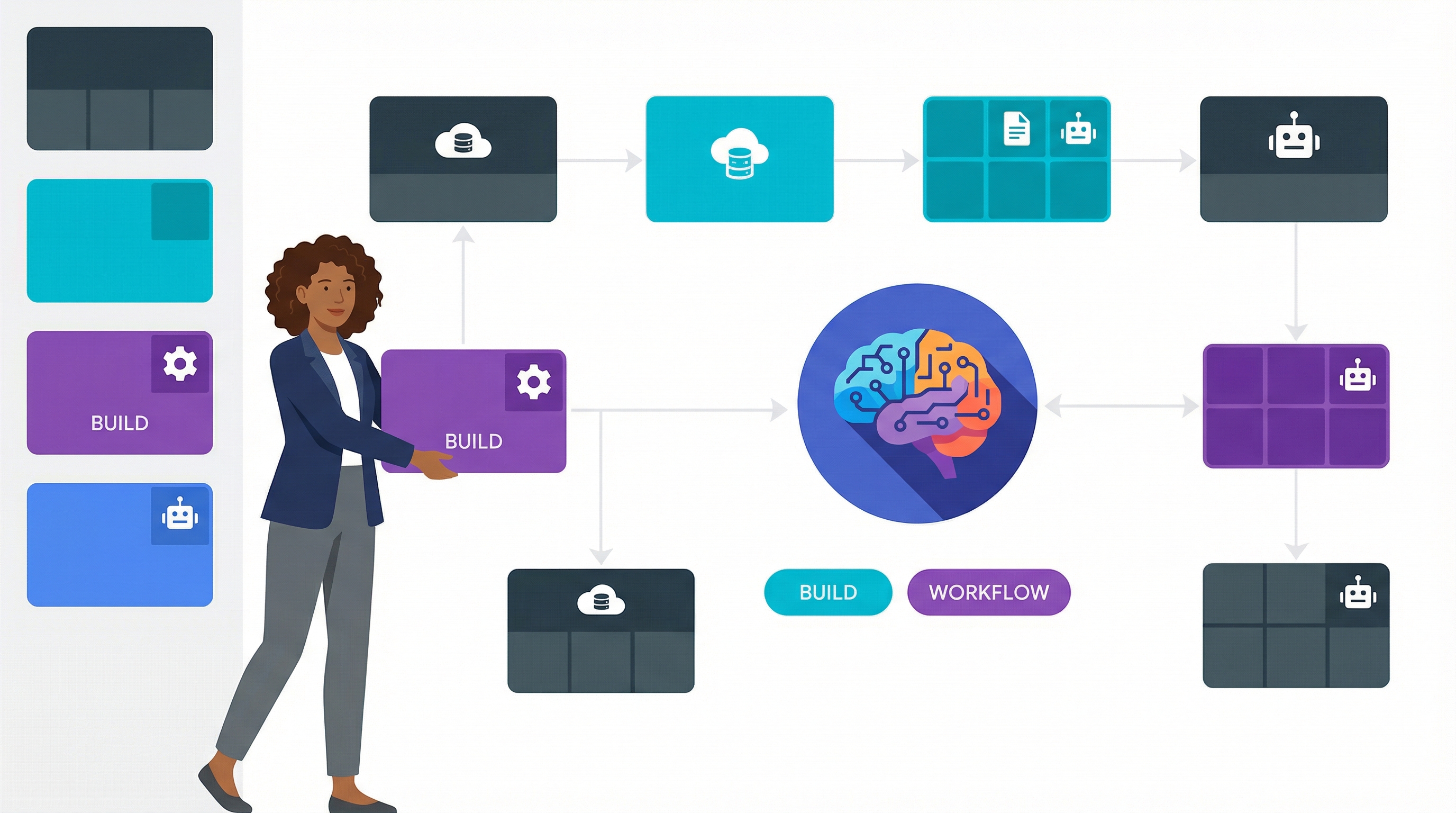
This trend has profound practical implications for your business. It means that business users and marketing teams build and deploy the sophisticated AI workflows they want to build . They can now leverage no-code ai platforms and a visual workflow builder within an automation tool to design and deploy sophisticated AI workflows for their internal tools . Standard features on 2026 platforms include drag-and-drop AI model integration , automated UI generation from simple text prompts, and a vast library of pre-built connectors and apis for essential data and AI integration services, all thanks to ai features that allow developers and non-technical users alike to rapidly deploy solutions for workflows and agents , which allows you to build ai solutions faster.
Exploring the 10 Best AI Automation Tools: A Top AI Review for 2026
When exploring the market for best ai workflow automation tools , it's crucial to understand how they differ from traditional platforms. This guide will help you navigate the landscape to identify the 10 best ai solutions for your specific needs.
What to Look For in a Top AI Automation AI Automation Tool
Every tool on this list is powerful, but its effectiveness depends on your strategy. Optimizing your business in 2026 with the right workflow tools starts with a deep understanding of your core workflow . Every successful automation project is built upon a well-defined workflow that maps out each step. Without this clear workflow , your efforts will be inefficient. A powerful workflow automation system allows you to design a custom workflow visually, helping you connect tools and different applications and AI models into a seamless process. The goal is to create a resilient workflow that handles errors and scales with demand. Consider every manual task as a candidate for a new automated workflow . This focus on the workflow is what separates leading companies from the rest, as a superior workflow directly translates to superior operational efficiency. The right automation software makes managing this complex workflow simple.
To accelerate development, many platforms offer a pre-built template for common use cases. Starting with a template can save dozens of hours, providing a proven structure for tasks like lead nurturing or customer support. You can then customize this template to fit the specific nuances of your business processes.
When selecting from the many available business tools , it is crucial to find a tool like the ones mentioned that aligns with your team's skill set and business goals. A marketing team might prefer a no-code tool like Zapier for its simplicity, while a development team may require a more powerful tool like n8n for its flexibility and control.
The Evolution to AI-Native Workflow Automation
For many, the journey into automation began with a tool like Zapier . For years, zapier and make have been the go-to platforms for simple, linear integrations. While still a capable tool in 2026, the primary use case for Zapier is often creating a simple workflow to connect two cloud applications with basic triggers and actions, like sending data from a form to Google Sheets or syncing contacts from tools like Gmail to a CRM. However, for complex, ai-native workflow automation processes, many find the capabilities of traditional tools like Zapier to be limiting. While Zapier excels at simple integrations, newer platforms are designed to handle truly complex workflows with advanced conditional logic and AI integration. Newer platforms have surpassed Zapier in handling conditional logic, parallel processing, and direct AI model integration. While you can still use Zapier for simple tasks, building a truly intelligent system often requires moving beyond what Zapier was designed for. We still see Zapier used for legacy systems, but the future, with tools like a dedicated agent builder , is more advanced than what Zapier offers. For example, Relevance AI is a platform that specializes in this type of advanced agent-based automation.
Beyond simple automation, the modern multi-step ai agents act as autonomous digital employees. This ai agent can be tasked with complex goals, such as 'increase lead conversion from the website by 5%,' and it will independently devise and execute strategies to achieve that outcome. A truly advanced ai agent can even negotiate with other agents, manage budgets, and learn from its performance to continuously improve.
Foundational Tools for Technical Teams
For more technical teams , n8n has emerged as a powerful tool and flexible alternative. Unlike more restrictive platforms, n8n is source-available, allowing for self-hosting and deep customization. The visual workflow editor in n8n is highly praised for its ability to handle complex branching logic, data transformations, and even tasks like web scraping . If your team needs to add ai models with granular control and the ability to extend the platform with custom code, tools like n8n are an excellent choice. The community around n8n is robust, constantly adding new nodes and integrations. For organizations prioritizing data privacy and control, self-hosting n8n is a significant advantage.

AI Automation Website: Frequently Asked Questions (FAQ)
Q1: What is the main difference between a standard website and an AI automation website in 2026?
A standard website is a passive tool that requires manual updates and provides a one-size-fits-all experience. An AI automation website is an active, autonomous platform that personalizes itself for every user, creates its own content, and automates business processes in real-time, functioning as an intelligent member of your team.
Q2: How much technical skill is needed to implement website AI automation now?
Thanks to advanced low-code/no-code platforms, the technical barrier is significantly lower. While building complex, custom AI models from scratch still requires data scientists, marketing and operations teams can now deploy powerful AI features for personalization, content generation, and workflow automation to streamline operations with minimal to no coding.
Q3: Can an AI automation website improve my SEO?
Absolutely. A website that uses ai is a powerful force for modern SEO. It can automate critical tasks like generating highly optimized meta descriptions, identifying content gaps by analyzing competitor rankings, building intelligent internal linking structures, and even creating entire topic clusters based on real-time search trends, significantly boosting organic visibility and authority.
Conclusion: Why Your Future is Driven by Automation and AI
The era of the static, manually-managed website is officially over. In 2026, your business's growth and relevance are inextricably linked to the adoption of an AI Automation Website. This is not a futuristic vision; it is the current, tangible reality, driven by the convergence of hyperautomation, generative AI, and accessible low-code platforms.
The time to act is now. Begin auditing your current digital ecosystem and strategize your transition. Finding the right best ai automation platform is key. Developing a solid plan often requires expert guidance, which is where AI strategy consulting can be invaluable. Embracing this synergy of automation and ai is the single most critical step to securing a lasting competitive advantage, driving unprecedented growth, and delivering the intelligent experience your customers not only desire but now expect.
Get started today and transform your digital presence into your most powerful asset.